


Leading Chemical Manufacturer in India & Bulk Chemical Exporter
Veeransh Chemicals is an ISO-certified manufacturer & global exporter of high purity Sulphonics, Chlorides, Phosphates, Nitrates, Fluorides and specialty micronutrients, trusted by agriculture, animal feed, water treatment & industrial buyers worldwide.
Industrial Chemical Blogs, Insights & Applications | Veeransh Chemicals
Insights,Innovationsand Industry Trends
Stay informed with expert articles, chemical guides and market trends.
Sulphates, Chlorides, and Sodium Compounds: Industrial Uses Explained
· Admin
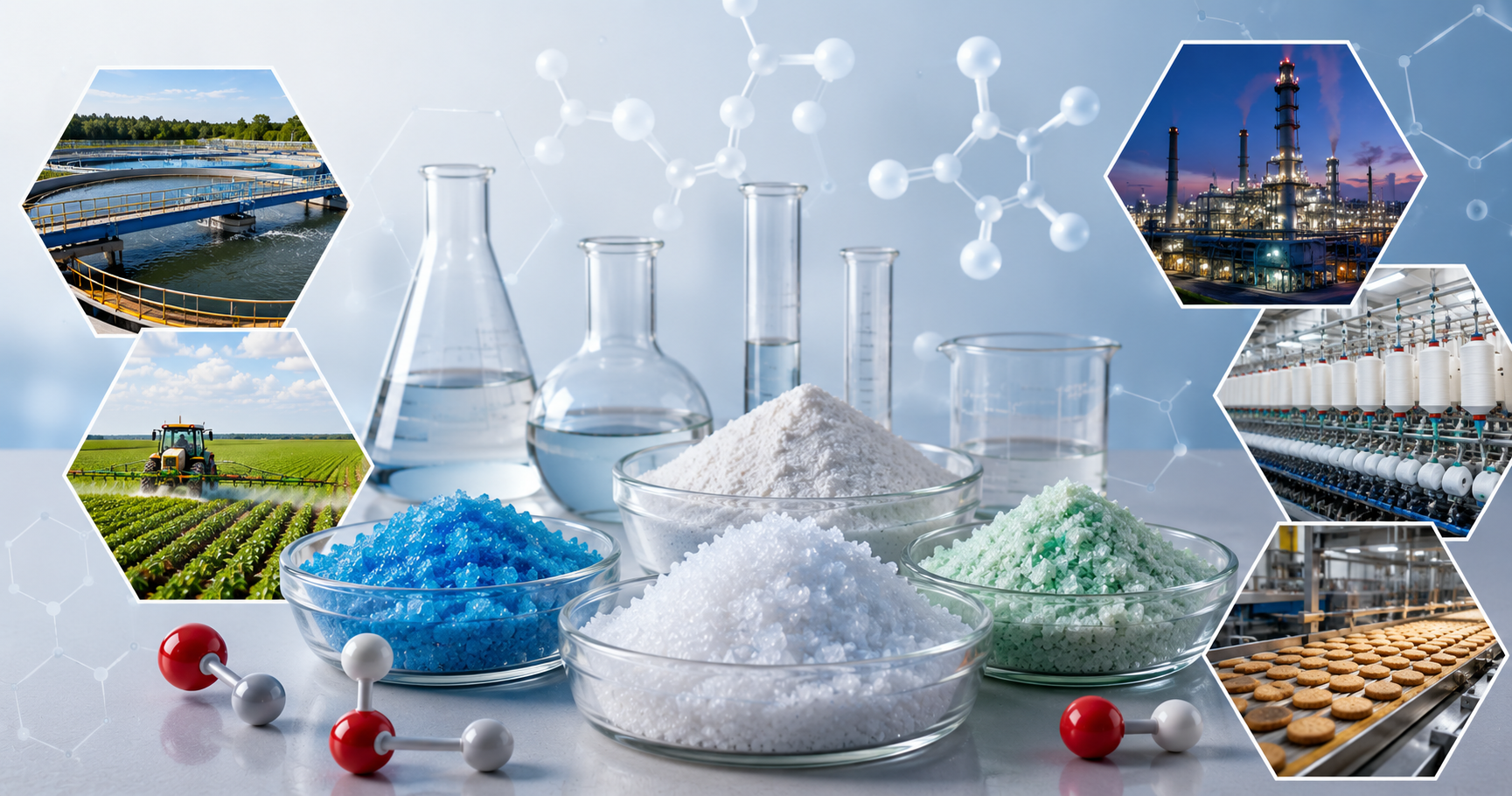
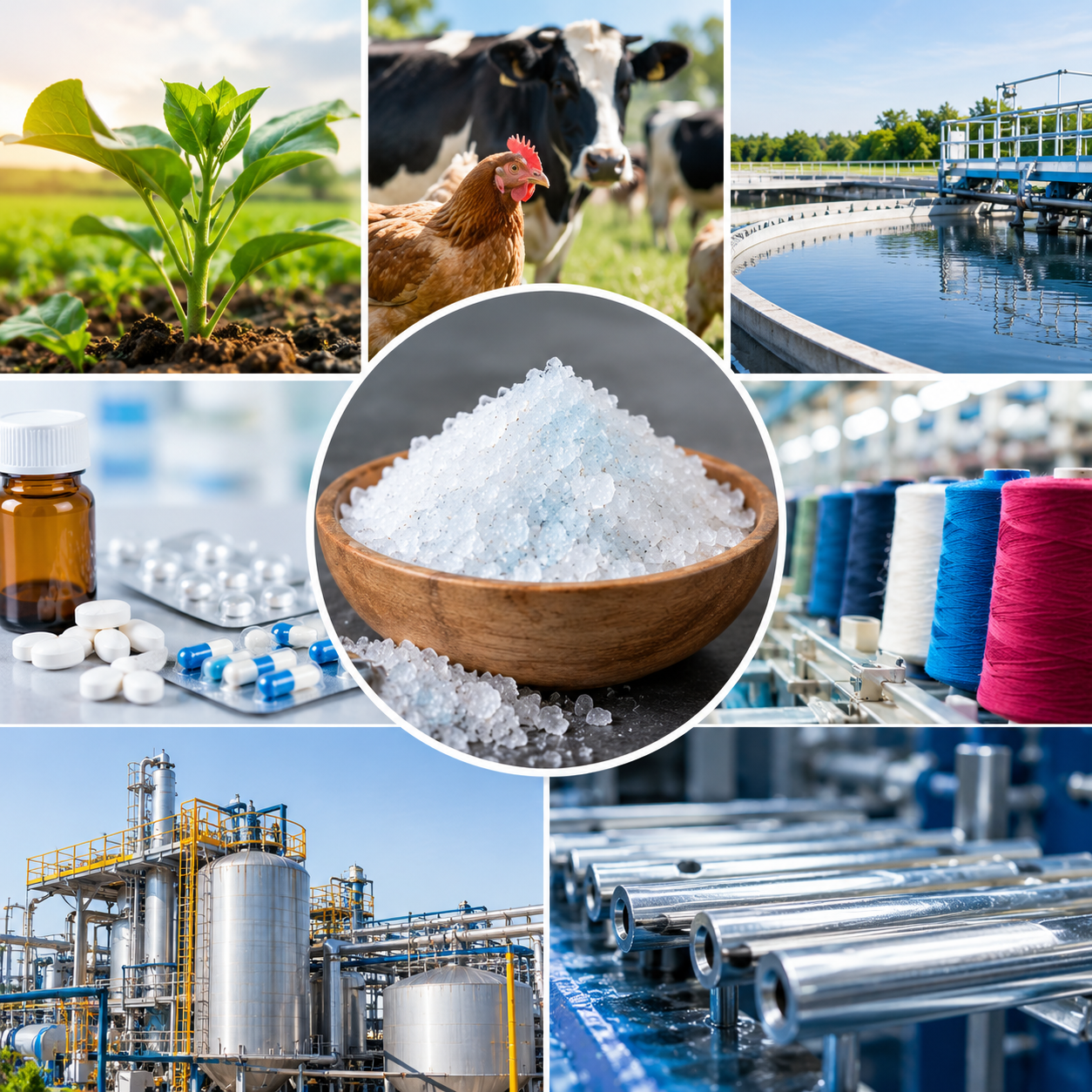
Industrial chemicals are an important part of modern manufacturing. From food processing and pharmaceuticals to textiles and water treatment, many industries depend on high-quality chemical compounds for smooth operations. Among the most widely used industrial chemicals are sulphates, chlorides, and sodium compounds. These chemicals are used in thousands of applications because of their stability, effectiveness, and versatility. Today, industries prefer working with a trusted sulphates manufacturer, chlorides manufacturer, and sodium compounds supplier to ensure consistent quality and reliable supply. In this blog, we will explain the industrial uses of sulphates, chlorides, and sodium compounds and why they are essential for different sectors. Understanding Sulphates, Chlorides, and Sodium Compounds These chemical compounds are widely used in industrial production and processing. What Are Sulphates? Sulphates are chemical salts that contain sulphur and oxygen. They are commonly used in agriculture, food processing, pharmaceuticals, water treatment, and chemical manufacturing. Some commonly used sulphates include: Zinc Sulphate Copper Sulphate Magnesium Sulphate Ferrous Sulphate Sodium Sulphate A reliable sulphates manufacturer supplies these compounds for multiple industrial applications. What Are Chlorides? Chlorides are compounds that contain chlorine. They are used in industries because of their chemical stability and processing properties. Common chloride compounds include: Calcium Chloride Magnesium Chloride Ammonium Chloride Sodium Chloride Zinc Chloride A professional chlorides manufacturer provides high-purity chloride compounds for industrial use. What Are Sodium Compounds? Sodium compounds are chemical compounds that contain sodium as a major element. These compounds are widely used in food processing, detergents, pharmaceuticals, textiles, and industrial manufacturing. Popular sodium compounds include: Sodium Phosphate Sodium Sulphate Sodium Bicarbonate Sodium Chloride Sodium Carbonate Industries rely on an experienced sodium compounds supplier for bulk and customized chemical solutions. Industrial Uses of Sulphates Sulphates are used in many industries because they support chemical reactions, nutrient supply, and product processing. Agriculture Industry Sulphates are widely used in fertilizers and micronutrient products. Zinc Sulphate Zinc Sulphate is used to improve soil nutrition and support crop growth. It helps prevent zinc deficiency in plants. Magnesium Sulphate Also known as Epsom salt, it improves plant health and supports chlorophyll production. Pharmaceutical Industry Many sulphate compounds are used in medicines and healthcare products. Ferrous Sulphate Used in iron supplements to treat iron deficiency. Magnesium Sulphate Used in medical treatments and pharmaceutical formulations. A trusted sulphates manufacturer ensures pharmaceutical-grade quality for safe applications. Water Treatment Industry Sulphates are used for water purification and wastewater treatment processes. Aluminium Sulphate Helps remove impurities from water during treatment. Food and Nutraceutical Industry Food-grade sulphates are used in nutritional and food processing applications. Zinc Sulphate Widely used in fortified foods and dietary supplements. This is why many food companies work with a reliable Sulphates Manufacturer in India for quality-certified ingredients. Industrial Uses of Chlorides Chlorides are important for industrial processing, moisture control, and chemical production. Construction Industry Calcium Chloride Used in concrete mixtures to speed up setting time during construction work. It is also used for: Dust control Road maintenance De-icing applications Textile Industry Magnesium Chloride Used in textile processing and fabric treatment. Zinc Chloride Used in textile finishing and dye manufacturing. A dependable chlorides manufacturer supplies these compounds for industrial-scale operations. Food Processing Industry Sodium Chloride Common salt is widely used in food preservation and flavor enhancement. Calcium Chloride Used in cheese making, canned vegetables, and beverage processing. Chemical Manufacturing Chlorides are used as raw materials in chemical production and industrial formulations. Industries prefer sourcing from a trusted chloride manufacturer in India for quality assurance and cost-effective supply. Industrial Uses of Sodium Compounds Sodium compounds are among the most commonly used industrial chemicals worldwide. Food Industry Sodium Phosphate Used in processed foods to improve texture, stability, and shelf life. Sodium Bicarbonate Commonly used in bakery products as a leavening agent. A trusted sodium compounds supplier provides food-grade compounds for safe food production. Detergent and Cleaning Industry Sodium Carbonate Used in detergent manufacturing and industrial cleaning products. Sodium Sulphate Used as a filler in powdered detergents. Glass and Ceramic Industry Sodium compounds help improve the manufacturing process in glass and ceramic production. Sodium Carbonate Used in glass manufacturing to reduce melting temperature. Water Treatment Industry Many sodium compounds are used to control water quality and treatment efficiency. Sodium Bisulphite Used for dechlorination and water purification. Why Industrial Quality Chemicals Matter Industrial applications require chemicals with: High purity Consistent quality Stable composition Safe handling standards Poor-quality chemicals can affect production efficiency and product performance. This is why industries prefer experienced suppliers and manufacturers for bulk chemical requirements. Choosing the Right Chemical Manufacturer in India India has become a major hub for industrial chemical manufacturing. Businesses across the world source chemicals from India because of quality production and competitive pricing. When selecting a chemical manufacturer in India , industries should look for: Quality Assurance Choose manufacturers that follow strict quality standards and testing procedures. Reliable Supply Chain Consistent delivery is important for uninterrupted production. Product Range A manufacturer with a wide chemical portfolio can support multiple industrial requirements. Export Capability Global industries prefer manufacturers with strong domestic and international supply networks. Why Choose Veeransh Chemicals? Veeransh Chemicals is a trusted sulphates manufacturer , chlorides manufacturer , and sodium compounds supplier serving domestic and global industries. We provide high-quality industrial chemicals for food, pharmaceutical, agriculture, textile, water treatment, and chemical processing industries. Our Product Range Includes Zinc Sulphate Magnesium Sulphate Sodium Sulphate Calcium Chloride Magnesium Chloride Sodium Phosphate Sodium Bicarbonate Sodium Carbonate Industrial-grade chemical compounds Why Industries Choose Veeransh Chemicals High-quality manufacturing standards Reliable bulk supply Competitive pricing Customized industrial solutions Domestic and global distribution Strong customer support As a leading chemical manufacturer in India , Veeransh Chemicals is committed to delivering safe, effective, and industry-approved chemical solutions. Conclusion Sulphates, chlorides, and sodium compounds are essential for many industries. From food processing and pharmaceuticals to agriculture and water treatment, these chemicals support important industrial operations every day. Working with a reliable chemical manufactuer in India helps industries maintain product quality and operational efficiency. Veeransh Chemicals continues to support domestic and international industries with premium-quality industrial chemicals and dependable supply services. FAQs 1. What are sulphates used for in industries? Sulphates are used in agriculture, pharmaceuticals, water treatment, food processing, and chemical manufacturing. 2. What is the industrial use of chlorides? Chlorides are used in construction, textile processing, food preservation, water treatment, and chemical production. 3. Which sodium compounds are commonly used in industries? Common sodium compounds include Sodium Phosphate, Sodium Carbonate, Sodium Sulphate, and Sodium Bicarbonate. 4. Why is choosing a reliable chemical manufacturer important? A reliable manufacturer ensures high-quality chemicals, consistent supply, product safety, and better industrial performance. 5. Why choose Veeransh Chemicals? Veeransh Chemicals provides premium-quality sulphates, chlorides, and sodium compounds for domestic and global industries with reliable supply and quality assurance.
Food Fortification Chemicals: Role in Nutrition and Food Processing
· Admin
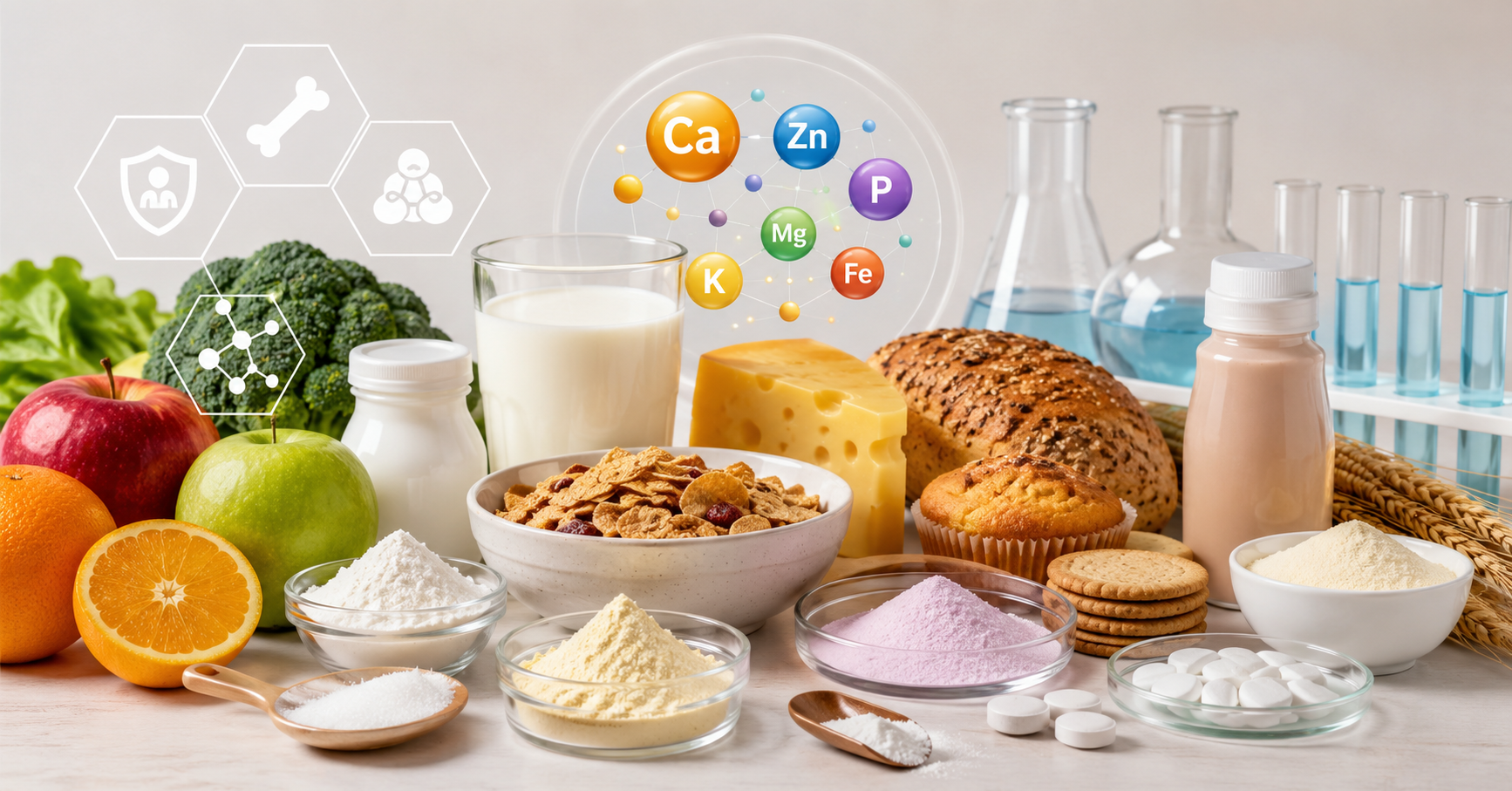
The food industry is changing fast. Today, consumers want food that is not only tasty but also healthy and nutritious. This is where food fortification plays an important role. Food manufacturers now add essential vitamins and minerals to improve the nutritional value of products. To achieve this, industries rely on a trusted food fortification chemicals supplier for high-quality ingredients and consistent supply. Food fortification chemicals help improve health, support food processing, and increase product shelf life. These ingredients are widely used in dairy products, bakery items, cereals, beverages, nutritional supplements, and processed foods. In this blog, we will understand the role of food fortification chemicals, their benefits, and why choosing the right supplier matters. What are Food Fortification Chemicals? Food fortification chemicals are nutrients added to food products to increase their health benefits. These include minerals, phosphates, and other nutritional compounds. They help food manufacturers create products that support better nutrition without changing taste or texture. These chemicals are commonly used in: Dairy products Infant food Health supplements Breakfast cereals Bakery products Energy drinks Processed foods Nutraceutical products A reliable nutraceutical ingredients supplier provides food-grade ingredients that meet safety and quality standards. Why Food Fortification Is Important? Many people do not get enough essential nutrients from their daily diet. Food fortification helps solve this problem by adding important minerals and nutrients to everyday food products. Key Benefits of Food Fortification Improves Nutrition Fortified foods provide essential nutrients like calcium, zinc, and phosphorus. These nutrients support overall health. Helps Prevent Deficiencies Ingredients such as Zinc Sulphate and Tricalcium Phosphate help reduce mineral deficiencies. Better Food Quality Fortification chemicals also improve food texture, stability, and shelf life. Supports Public Health Nutrient-rich foods help improve health conditions in children and adults. Common Food Fortification Chemicals Used in Food Processing Different chemicals are used for different food applications. Below are some commonly used ingredients supplied by a trusted food fortification chemicals supplier . Tricalcium Phosphate (TCP) Tricalcium Phosphate is widely used in food and nutraceutical products. Uses of TCP Breakfast cereals Milk powder Health supplements Bakery products Infant nutrition Benefits of TCP Good source of calcium Supports bone health Prevents lump formation Improves product stability TCP is one of the most popular ingredients used by food manufacturers. Zinc Sulphate Zinc is an important mineral for the human body. Zinc Sulphate is commonly used in fortified foods and supplements. Applications Nutritional supplements Functional foods Beverages Animal nutrition products Benefits Supports immunity Helps body growth Improves metabolism Prevents zinc deficiency A professional nutraceutical ingredients supplier ensures high-purity Zinc Sulphate for safe use in food products. Sodium Phosphate Sodium Phosphate is widely used in food processing industries. Common Uses Processed meat Cheese products Bakery items Ready-to-eat foods Benefits Maintains pH balance Improves texture Helps retain moisture Increases shelf life It is an important ingredient for improving food quality during processing. Other Important Phosphate Chemicals A leading phosphates manufacturer also supplies many other phosphate compounds used in food and nutrition industries. Dicalcium Phosphate (DCP) Used in: Health supplements Animal feed Fortified foods Benefits: Provides calcium and phosphorus Supports bone health Monocalcium Phosphate (MCP) Used in: Baking powder Bakery products Benefits: Helps dough rise properly Improves baking performance Potassium Phosphate Used in: Sports drinks Health beverages Nutritional products Benefits: Provides potassium Controls acidity Improves product stability Role of Phosphates in Food Processing Phosphates are very important in modern food manufacturing. They improve both nutrition and food quality. Main Functions of Phosphates Moisture Retention Phosphates help foods stay fresh and juicy for a longer time. Better Texture They improve the texture of processed foods. pH Control Phosphates maintain the right acidity level in food products. Longer Shelf Life They help increase product stability and shelf life. Nutritional Support Many phosphate compounds provide essential minerals like calcium and phosphorus. This is why food industries prefer working with an experienced phosphates manufacturer . Growing Demand for Nutraceutical Ingredients Health-conscious consumers are increasing the demand for nutraceutical and fortified products. Today, people prefer foods that offer extra health benefits. This has increased the need for a trusted nutraceutical ingredients supplier . Popular Nutraceutical Ingredients Zinc Sulphate Tricalcium Phosphate Sodium Phosphate Dicalcium Phosphate Potassium Phosphate These ingredients are widely used in: Dietary supplements Functional foods Sports nutrition Health drinks Pharmaceutical products How to Choose the Right Food Fortification Chemicals Supplier Choosing the right supplier is important for product quality and safety. Look for These Factors Quality Standards The supplier should provide food-grade certified chemicals. Reliable Supply Consistent supply is important for uninterrupted production. Technical Support An experienced supplier can help with product selection and application support. Industry Experience Choose a company with strong manufacturing and export experience. Why Choose Veeransh Chemicals? Veeransh Chemicals is a trusted manufacturer and supplier of food fortification chemicals, phosphate compounds, and nutraceutical ingredients. We serve both domestic and global industries with high-quality chemical solutions. Our Product Range Tricalcium Phosphate (TCP) Zinc Sulphate Sodium Phosphate Potassium Phosphate Dicalcium Phosphate Monocalcium Phosphate Nutraceutical ingredients Food-grade phosphate chemicals Why Industries Trust Veeransh Chemicals High-quality manufacturing standards Reliable domestic and global supply Competitive pricing Bulk supply capability Strong customer support Customized solutions for industries As a leading food fortification chemicals supplier , nutraceutical ingredients supplier , and phosphates manufacturer , Veeransh Chemicals is committed to delivering safe and effective solutions for the food and nutrition industry. Conclusion These chemicals help improve nutritional value, product stability, and shelf life. With the growing demand for healthy food products, choosing the right food fortification chemicals supplier is more important than ever. As leading chemical manufacturer in India , Veeransh Chemicals continues to support domestic and global industries with premium-quality phosphate chemicals and nutraceutical ingredients for modern food processing needs. FAQs 1. What are food fortification chemicals? Food fortification chemicals are nutrients and mineral compounds added to food products to improve their nutritional value. 2. What is Tricalcium Phosphate used for? Tricalcium Phosphate is used as a calcium source and anti-caking agent in cereals, supplements, dairy products, and bakery items. 3. Why are phosphates used in food processing? Phosphates help improve texture, moisture retention, pH balance, and shelf life in processed foods. 4. What does a nutraceutical ingredients supplier provide? A nutraceutical ingredients supplier provides food-grade nutritional ingredients used in supplements, health foods, and functional products. 5. Why choose us for Food Fortification Chemicals? Veeransh Chemicals offers high-quality food fortification chemicals, phosphate compounds, and nutraceutical ingredients with reliable domestic and global supply services.
Zinc Sulphate in Agriculture: Uses, Benefits & Applications
· Admin
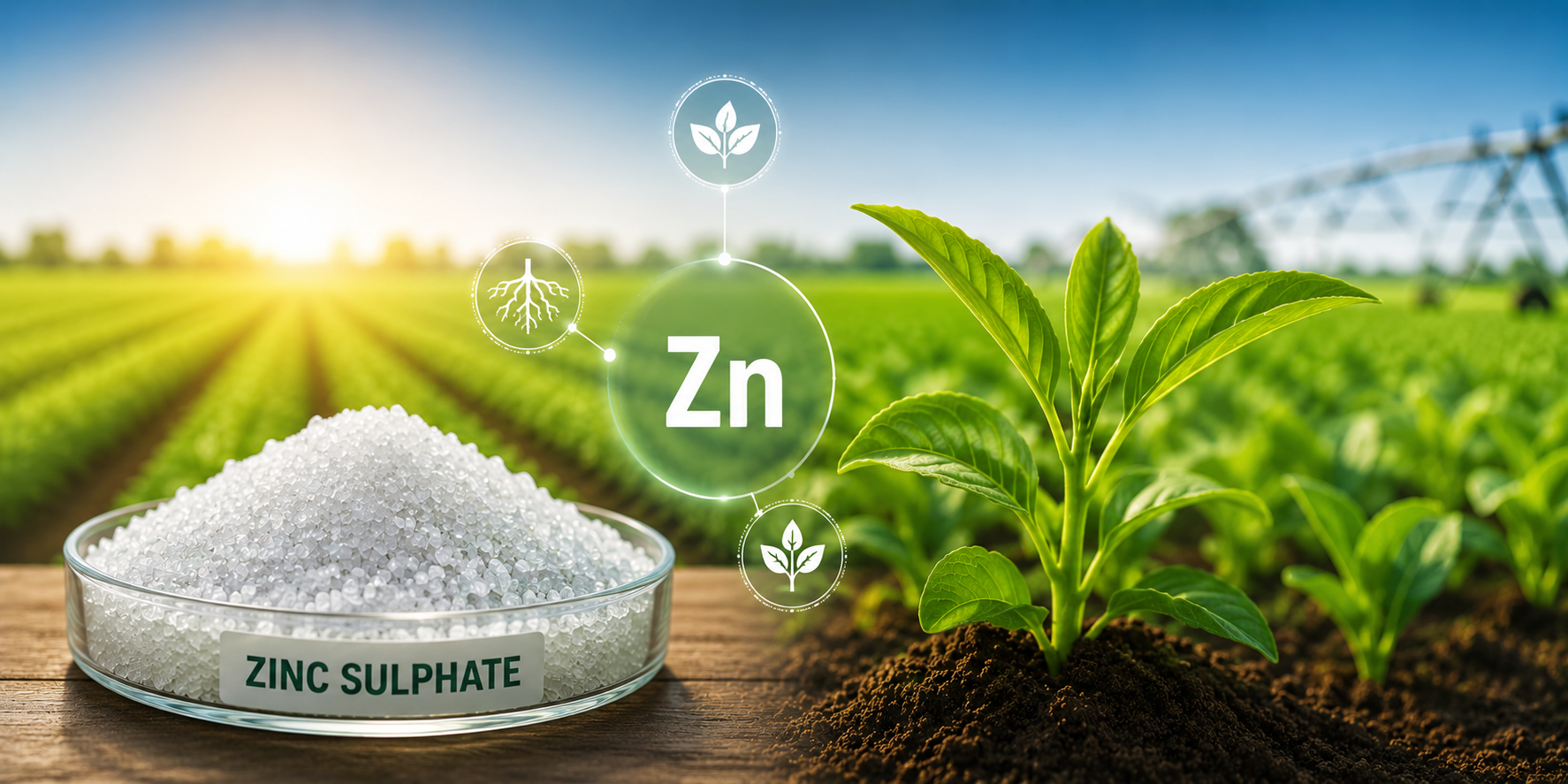
Modern agriculture depends on balanced nutrition to maintain soil health and improve crop productivity. While macronutrients like nitrogen and phosphorus often get more attention, micronutrients play an equally important role. One such essential micronutrient is zinc. Zinc deficiency is now a common issue in many agricultural regions due to intensive farming and soil depletion. This is where zinc sulphate in agriculture becomes important. It is widely used to correct deficiencies, improve plant growth, and support better yields. In this guide, we explain the practical uses, benefits, and applications of zinc sulphate for agriculture, along with key considerations for buyers and agribusinesses. What is Zinc Sulphate in Agriculture? Zinc sulphate is a water-soluble compound that provides zinc, an essential micronutrient required for plant growth. It is commonly used as a micronutrient fertilizer in various crops. Why Zinc Matters in Crop Nutrition Zinc plays a role in: Enzyme activation Protein synthesis Growth hormone production Seed and grain development Without sufficient zinc, plants show stunted growth, yellowing of leaves, and reduced yields . Common Uses of Zinc Sulphate for Agriculture 1. Soil Application Zinc sulphate is applied directly to the soil to improve zinc availability. Use case: Pre-sowing soil treatment Correction of long-term zinc deficiency 2. Foliar Spray Applied as a spray on plant leaves for faster absorption. Use case: Mid-season nutrient correction Quick response to visible deficiency symptoms 3. Seed Treatment Used during seed preparation to support early-stage growth. Use case: Improved germination Strong root development Key Benefits of Zinc Sulphate in Agriculture Improved Crop Yield Balanced zinc levels support better plant growth and higher productivity. Better Nutrient Uptake Zinc helps plants absorb and use other nutrients more efficiently. Enhanced Disease Resistance Healthy plants are more resilient to environmental stress and certain diseases. Uniform Crop Growth Reduces patchy growth caused by micronutrient imbalance. Supports Soil Health Regular use helps maintain micronutrient balance in soil over time. Applications Across Crops Zinc sulphate is used in a wide range of crops: Cereals: wheat, rice, maize Pulses: lentils, chickpeas Oilseeds: soybean, mustard Fruits & vegetables: citrus, potatoes, onions Example: In rice cultivation, zinc deficiency often leads to “khaira disease,” which can significantly reduce yield. Applying zinc sulphate helps correct this issue effectively. Key Considerations for Buyers For importers, distributors, and agribusinesses, selecting the right supplier is critical. 1. Product Quality Ensure consistent purity and composition. Variations can affect crop performance. 2. Form and Grade Zinc sulphate is available in: Monohydrate Heptahydrate Choose based on application method and regional farming practices. 3. Compliance and Standards Check for adherence to international quality and safety standards. 4. Packaging and Logistics Reliable packaging ensures product stability during transport and storage. 5. Supply Consistency Work with a dependable zinc sulphate manufacturer who can meet ongoing demand without delays. Why It Matters for Businesses and Buyers For B2B buyers, zinc sulphate is not just a product—it’s part of a larger crop nutrition strategy. Helps improve end-user satisfaction (farmers) Reduces complaints related to crop deficiencies Supports long-term soil productivity Aligns with sustainable farming practices Reliable sourcing from a trusted fertilizer chemical manufacturer ensures consistent quality, which directly impacts field performance and customer trust. About Veeransh Chemicals At Veeransh Chemicals, we operate as a Zinc Sulphate manufacturer , exporter, and B2B supplier in India. We provide industrial and agricultural chemicals for global markets. We focus on: Consistent product quality and controlled manufacturing processes Supplying micronutrient fertilizers that meet industry requirements Supporting bulk and international shipments with reliable logistics Understanding application needs across different crops and regions Our approach is practical, deliver materials that perform consistently and support long-term business relationships. Conclusion Zinc plays a vital role in modern agriculture, and its deficiency can directly impact crop health and yield. Using zinc sulphate in agriculture is a practical and widely accepted solution to address this gap. From soil application to foliar sprays, its flexibility makes it suitable for different farming methods and crops. For businesses and buyers, the focus should be on quality, consistency, and reliable supply. Choosing the right zinc sulphate for agriculture is not just about price, it’s about ensuring dependable performance in the field. FAQs 1. What is zinc sulphate used for in agriculture? Zinc sulphate is used to correct zinc deficiency in crops. It supports plant growth, improves enzyme activity, and helps increase yield. It can be applied through soil, foliar spray, or seed treatment depending on crop needs. 2. How do I know if crops need zinc sulphate? Common signs include yellowing leaves, stunted growth, and reduced yield. Soil testing and plant analysis are recommended for accurate diagnosis before application. 3. What is the difference between zinc sulphate monohydrate and heptahydrate? The main difference is zinc concentration. Monohydrate typically has higher zinc content, while heptahydrate is more commonly used in general agricultural applications . The choice depends on crop and soil conditions. 4. Is zinc sulphate safe for all crops? Yes, when used in recommended doses. Over-application can harm plants, so it is important to follow proper guidelines based on crop type and soil condition. 5. Can zinc sulphate be mixed with other fertilizers? It can be mixed with certain fertilizers, but compatibility depends on formulation. It’s advisable to test small batches or consult an expert before large-scale use. 6. What should buyers look for in a zinc sulphate supplier? Buyers should check product consistency, purity, certifications, packaging quality, and the supplier’s ability to handle bulk orders and global logistics.
Boric Acid Manufacturers in India: Industrial Expertise, Compliance, and Global Supply Standards India has emerged as a strong production and export hub for boron-based chemicals. Among them, Boric Acid remains one of the most versatile and commercially significant compounds. As demand grows across agriculture, glass manufacturing, pharmaceuticals, metallurgy, and nuclear energy, industrial buyers increasingly seek reliable Boric Acid Manufacturers in India capable of consistent purity, regulatory compliance, and dependable supply. A professional Chemical Manufacturer in India serving domestic and export markets must demonstrate manufacturing control, technical expertise, and documentation transparency. This article provides a comprehensive technical overview for industrial buyers evaluating suppliers. What is Boric Acid? Boric Acid, also known as Orthoboric Acid, Boracic Acid, or Acidum Boricum, is a water-soluble inorganic compound with the molecular formula H3BO3 or structurally represented as B(OH)3. In nature, it occurs as the mineral Sassolite. It appears as a white crystalline powder or granular solid. Chemically, it behaves as a weak acid, not by releasing protons directly but by accepting hydroxyl ions in aqueous solution. Key Chemical Characteristics Molecular Formula: H3BO3 Chemical Structure: B(OH)3 Appearance: White crystalline powder Solubility: Moderately soluble in water, higher in hot water Nature: Weak acid Classification: Water-soluble inorganic compound Industrial-grade variations typically include 99% to 99.5% Pure Boric Acid, depending on application requirements. Manufacturing Overview: From Raw Material to Refined Boric Acid Powder Reputable Leading Boric Acid Manufacturer in India operations follow controlled manufacturing steps to ensure reliable chemical composition and consistent assay. 1. Raw Materials Boric acid production commonly begins with borate minerals such as borax (sodium borate). Manufacturers react borax with a mineral acid under controlled conditions to produce boric acid solution. 2. Refining and Crystallization The solution undergoes filtration to remove insoluble impurities. Controlled cooling induces crystallization. Precise temperature management determines crystal size and purity. 3. Drying and Milling Crystals pass through drying systems to achieve moisture-controlled parameters. Grinding and sieving processes determine mesh size as per customer requirements. 4. Quality Control Reliable manufacturers implement Stringent Quality Control systems. Each batch undergoes assay testing, impurity profiling, moisture content analysis, and solubility checks. The result is Batch Tested Boric Acid with Uniform Quality and Consistent Assay. An experienced High Purity Boric Acid Manufacturer ensures moisture control, minimal heavy metal traces, and stable chemical composition suitable for sensitive industrial applications. Industrial Uses of Boric Acid by Sector The versatility of boron chemistry drives broad adoption across industries. Glass & Ceramics Industry Boric Acid for Glass Industry improves thermal resistance, durability, and chemical stability. In Boric Acid in Glass Manufacturing, it reduces melting temperature and enhances clarity. Boric Acid for Ceramics and Boric Acid in Ceramics enhance glaze smoothness, mechanical strength, and resistance to cracking. Agriculture & Fertilizers Boric Acid for Agriculture serves as an essential micronutrient. As a Boric Acid Micronutrient, it supports cell wall formation and reproductive growth in crops. In Boric Acid for Fertilizers, manufacturers blend controlled dosages to prevent boron deficiency. Flame Retardants & Safety Materials Boric Acid for Flame Retardants functions as a fire-resistant additive. Boric Acid as Flame Retardant promotes char formation and suppresses combustion in treated materials. Metallurgy & Welding In Boric Acid for Metallurgy and Boric Acid for Welding Flux, it acts as a fluxing agent that improves metal surface treatment and reduces oxidation. Nuclear Power Boric Acid in Nuclear Reactors regulates neutron absorption in pressurized water reactors. Boric Acid for Nuclear Power Plants plays a critical safety role by controlling reactivity levels. Pharmaceuticals & Cosmetics Boric Acid for Pharmaceuticals includes use as buffering agent and topical antiseptic. Historically known as Boric Acid as Antiseptic, it is considered Non-toxic at Recommended Dosage when used according to regulatory guidelines. Boric Acid for Cosmetics appears in controlled concentrations for preservative or pH-adjusting purposes. Laboratory & Biotechnology In laboratories, Boric Acid in TBE Buffer supports Boric Acid for Electrophoresis applications, particularly Boric Acid for DNA and RNA Gel separation systems. Electronics & Chemical Processing Boric Acid for Electronics contributes to fiberglass production and semiconductor-related materials. In Boric Acid for Chemical Processing and Boric Acid for Industrial Cleaning Agents, it functions as buffering or corrosion-control component. Additional Applications Boric Acid for Enamels and Cements Boric Acid as Insecticide Boric Acid for Pyrotechnics The wide scope of Boric Acid Uses reflects its chemical stability and multifunctional properties. Technical Specifications and Grades Industrial buyers typically evaluate: Purity Levels: 99% and 99.5% Pure Boric Acid Mesh Size: Powdered or granular forms Solubility Parameters Moisture Content: Moisture Controlled Boric Acid Packaging: 25 kg HDPE bags with liners, jumbo bags, customized bulk formats A Bulk Boric Acid Supplier ensures packaging integrity to prevent caking and contamination during transit. Regulatory Compliance and Safety Standards An ISO Certified Boric Acid Manufacturer adheres to documented process control systems. Compliance may involve: ISO quality management standards REACH compliance for European exports where applicable Proper labeling under GHS guidelines Updated MSDS documentation Safe storage requires dry, ventilated conditions away from moisture. Manufacturers must provide safety data sheets and transport classification documentation. Quality Assurance and Testing Standards A High Purity Boric Acid Manufacturer follows systematic quality testing: Assay testing pH measurement Insoluble matter analysis Heavy metal screening Moisture content analysis These practices ensure Reliable Chemical Composition and stable performance across applications. Supply Capability and Export Strength India’s strong chemical infrastructure supports large-scale manufacturing. A professional Boric Acid Supplier in India typically offers: Bulk and Custom Orders Reliable Stock Availability Competitive logistics planning Structured Export Procedures Transparent documentation A credible Boric Acid Exporter from India and Boric Acid Global Exporter manages export compliance, packaging stability, and port coordination. Many Boric Acid Wholesalers in India serve regional demand, while industrial clients prefer direct engagement with an Industrial Boric Acid Supplier for volume contracts. Common Misconceptions About Boric Acid 1. Industrial vs Pharmaceutical Grade Industrial material does not automatically qualify for pharmaceutical applications. Each grade requires distinct purity validation and regulatory clearance. 2. Toxicity Myths Boric acid is a weak acid. When handled correctly and used within recommended industrial concentrations, it remains safe. Misuse or excessive exposure leads to health risks, which proper documentation and training prevent. 3. Interchangeability with Other Borates Not all boron compounds behave identically. Buyers must distinguish between boric acid and other Borates Manufacturers in India products. Buying Guide: Selecting the Right Boric Acid Manufacturer Industrial buyers seeking to Buy Boric Acid in Bulk should evaluate: Purity consistency and assay reliability Production capacity and stock stability Transparent technical documentation Compliance certifications Moisture control systems Competitive pricing aligned with quality Technical support and application guidance A Trusted Boric Acid Supplier demonstrates Over a Decade of Manufacturing Expertise, structured quality control, and stable supply chains. Risks of Choosing Low-Quality Suppliers Compromising on supplier selection can result in: Inconsistent batch quality Undeclared impurities Operational downtime Compliance failures Financial losses due to rejected consignments In sectors like Boric Acid in Nuclear Reactors or Boric Acid for Pharmaceuticals, quality failure is unacceptable. Market Context and Industry Positioning The Boric Acid Market in India continues to expand alongside growth in agriculture, infrastructure, ceramics, and specialty chemicals. Leading Industrial Chemicals Manufacturers in India increasingly invest in sustainable processes and efficient supply systems. Professional Boron Compounds Manufacturers in India focus on controlled manufacturing, export capability, and documentation transparency to maintain international competitiveness. How This Content Was Developed This article is based on established industrial chemical standards, widely accepted boric acid manufacturing practices, and recognized regulatory compliance frameworks. The technical explanations reflect standard chemical engineering processes, quality assurance methodologies, and globally accepted industrial safety norms. No exaggerated claims or unverifiable certifications have been included. The information aligns with conventional industry knowledge and practical manufacturing expertise. Industrial Boric Acid Supply – Direct from Manufacturer For buyers seeking a dependable Boric Acid Manufacturers in India partner with structured quality control and export capability, detailed specifications are available here: https://www.veeranshchemicals.com/products/boric-acid The product page outlines technical parameters, packaging formats, and commercial details relevant for industrial procurement.
Zinc Sulphate Monohydrate vs Heptahydrate: Complete Guide
· Admin
Zinc Sulphate Monohydrate vs Heptahydrate: Key Differences Explained Zinc sulphate is one of the most important inorganic compounds used across agriculture, animal nutrition, pharmaceuticals, and industrial applications. Whether you're a procurement manager sourcing zinc supplements for fertilizers, a feed manufacturer requiring precise mineral content, or a student understanding chemical hydrates, choosing between zinc sulphate monohydrate and heptahydrate can significantly impact product performance, cost-efficiency, and storage requirements. Both forms contain the same active ingredient—zinc sulphate—but differ fundamentally in their water of crystallization, which affects zinc concentration, solubility, stability, and suitability for specific applications. This comprehensive guide explains the technical specifications, practical differences, and industry applications of both forms to help you make informed sourcing decisions. Understanding Chemical Hydrates: What Makes Them Different? What is Zinc Sulphate Monohydrate? Zinc sulphate monohydrate (chemical formula: ZnSO₄·H₂O) contains one molecule of water of crystallization bound to each zinc sulphate molecule. This single water molecule is structurally integrated into the crystal lattice, contributing to the compound's physical properties and stability. Key Technical Specifications: Molecular Formula: ZnSO₄·H₂O Molecular Weight: 179.45 g/mol CAS Number: 7446-19-7 HSN Code: 2833 29 70 Zinc Content: 34.5-36% Appearance: White crystalline powder Density: 3.2 g/cm³ What is Zinc Sulphate Heptahydrate? Zinc sulphate heptahydrate (chemical formula: ZnSO₄·7H₂O) contains seven molecules of water of crystallization per zinc sulphate molecule. The higher water content results in lower zinc concentration but enhanced water solubility characteristics. Key Technical Specifications: Molecular Formula: ZnSO₄·7H₂O Molecular Weight: 287.54-287.56 g/mol CAS Number: 7446-20-0 HSN Code: 2833 29 70 Common Name: Goslarite, Zinc Vitriol Zinc Content: 20-22% Appearance: Colorless crystals or white granular powder Density: 1.957 g/cm³ The notation ZnSO₄·7H₂O (also written as znso4 7h2o) clearly indicates the seven water molecules that distinguish heptahydrate zinc sulphate from its monohydrate counterpart. Detailed Comparison: Zinc Sulphate Monohydrate vs Heptahydrate COMPARISON: ZINC SULPHATE MONOHYDRATE vs HEPTAHYDRATE MOLECULAR FORMULA • Monohydrate: ZnSO₄·H₂O • Heptahydrate: ZnSO₄·7H₂O MOLECULAR WEIGHT • Monohydrate: 179.45 g/mol • Heptahydrate: 287.54 g/mol CAS NUMBER • Monohydrate: 7446-19-7 • Heptahydrate: 7446-20-0 ZINC CONTENT (%) • Monohydrate: 34.5-36% • Heptahydrate: 20-22% WATER OF CRYSTALLIZATION • Monohydrate: 1 molecule • Heptahydrate: 7 molecules PHYSICAL FORM • Monohydrate: White crystalline powder • Heptahydrate: Colorless crystals/white granules WATER SOLUBILITY • Monohydrate: 350 g/L (moderate) • Heptahydrate: 960 g/L (highly soluble) MOISTURE ABSORPTION • Monohydrate: Low (less hygroscopic) • Heptahydrate: High (readily absorbs moisture) STORAGE STABILITY • Monohydrate: Excellent - resists caking • Heptahydrate: Moderate - prone to clumping pH (50 g/L solution) • Monohydrate: 4.0-5.6 • Heptahydrate: 4.0-6.0 COST EFFICIENCY • Monohydrate: Higher unit cost • Heptahydrate: 10-15% lower cost PRIMARY APPLICATIONS • Monohydrate: Animal feed, precision agriculture, pharmaceuticals • Heptahydrate: Foliar fertilizers, soil application, industrial use DOSAGE REQUIREMENT • Monohydrate: Lower (higher zinc concentration) • Heptahydrate: Higher (lower zinc concentration) SHELF LIFE • Monohydrate: Longer (stable in humid conditions) • Heptahydrate: Shorter (requires moisture control) Zinc Content: The Critical Difference The most important practical difference between zinc sulphate monohydrate and heptahydrate lies in their zinc content. Zinc sulphate monohydrate provides 34.5-36% elemental zinc, meaning 100 kg of monohydrate delivers approximately 35 kg of pure zinc. This higher concentration makes it more cost-effective when transportation and storage space are considerations, as less product volume is needed to achieve the desired zinc supplementation level. Zinc sulphate heptahydrate contains 20-22% elemental zinc due to the additional water molecules occupying molecular weight. Consequently, approximately 160-175 kg of heptahydrate is required to deliver the same amount of zinc as 100 kg of monohydrate. However, the lower production cost partially offsets this difference. Solubility and Moisture Behavior Water Solubility Zinc sulphate heptahydrate demonstrates significantly higher water solubility (960 g/L) compared to monohydrate (350 g/L). This enhanced solubility makes heptahydrate particularly suitable for applications requiring rapid dissolution, such as foliar sprays, liquid fertilizers, and water-based formulations. For foliar application in agriculture, spray solutions typically contain 0.5-2% zinc sulphate heptahydrate dissolved in water, allowing quick absorption through plant leaves. The high solubility ensures complete dissolution without residue or clogging of spray equipment. Hygroscopic Properties Zinc sulphate monohydrate exhibits lower hygroscopicity—it resists moisture absorption from the atmosphere and remains free-flowing even in humid storage conditions. This characteristic makes it ideal for animal feed applications and situations requiring long-term storage before use. Zinc sulphate heptahydrate, with seven water molecules in its structure, readily absorbs atmospheric moisture and tends to cake or clump during storage. Industries using heptahydrate must implement proper packaging (moisture-barrier bags) and climate-controlled storage to maintain product quality. Mixed formulations containing heptahydrate should be used promptly after preparation. Applications: Which Form to Choose? Zinc Sulphate Monohydrate Uses 1. Animal Feed and Nutrition The feed industry overwhelmingly prefers zinc monohydrate due to its superior stability, resistance to caking, and higher zinc concentration. Feed mills producing premixes or complete feeds require zinc supplements that remain homogeneous during storage and transportation. The non-hygroscopic nature of zinc sulphate monohydrate ensures consistent zinc delivery in animal nutrition programs. 2. Precision Agriculture and Soil Application Modern agricultural practices increasingly favor zinc sulphate monohydrate fertilizer for soil dressing, side-dressing, and incorporation into granulated fertilizer blends. The higher zinc content reduces application volumes, and the stable powder form facilitates mechanical blending with other fertilizer components. 3. Pharmaceutical and Industrial Applications Fine chemical industries and pharmaceutical manufacturing utilize zinc sulphate monohydrate for controlled zinc supplementation, reagent preparation, and specialized chemical synthesis. The predictable composition and lower water content provide greater precision in formulation chemistry. 4. Export Markets International buyers, particularly in regions with high humidity during shipping, prefer monohydrate for its stability and longer shelf life. The reduced moisture sensitivity minimizes quality degradation during extended logistics chains. Zinc Sulphate Heptahydrate Uses 1. Foliar Fertilizers Zinc sulphate heptahydrate is the preferred form for foliar application due to its excellent water solubility. Farmers preparing foliar sprays to address zinc deficiency in crops benefit from the rapid dissolution characteristics, creating clear spray solutions that effectively coat leaves without crystallization or equipment blockage. Agricultural spraying typically occurs during critical growth stages such as flowering or fruit set, and zinc sulphate heptahydrate ensures efficient leaf absorption. 2. Agricultural Soil Treatment For correcting zinc deficiency in alkaline and sandy soils—common across India and many global agricultural regions—zinc sulphate heptahydrate provides an economical solution. Broadcast application, incorporation before planting, and side-dressing methods all utilize heptahydrate effectively when rapid soil dissolution is beneficial. 3. Soil Remediation In areas affected by heavy metal contamination, zinc sulphate heptahydrate helps immobilize harmful contaminants, reducing their bioavailability and environmental risks. The high solubility facilitates even distribution and chemical interaction with problem elements. 4. Industrial Chemical Processing Industries requiring highly soluble zinc sources for aqueous chemical reactions, electroplating baths, textile processing, and water treatment systems often select heptahydrate. The cost advantage (10-15% lower than monohydrate) and immediate dissolution make it suitable for high-volume industrial operations where moisture control in storage is manageable. 5. Crop-Specific Applications Zinc sulphate heptahydrate fertilizer effectively treats various crops including beans, cereals, fruits, vegetables, flowers, citrus, cotton, oilseeds, sugar beets, and medicinal plants. The versatility across crop types makes it a staple in agricultural input supply chains. Storage and Handling Considerations For Zinc Sulphate Monohydrate: Store in cool, dry conditions in sealed containers Compatible with most fertilizer and feed storage facilities Minimal risk of caking during extended storage periods Suitable for bulk storage and pneumatic handling systems Long shelf life with proper basic storage practices For Zinc Sulphate Heptahydrate: Requires moisture-barrier packaging (HDPE bags with liners) Store in climate-controlled warehouses when possible Use within recommended timeframes after opening Implement first-in-first-out (FIFO) inventory management Mixed formulations should be used immediately or within days Both forms are hygroscopic to varying degrees and should be protected from direct moisture exposure. Cost Considerations and Economic Analysis Price Differences Zinc sulphate heptahydrate typically costs 10-15% less than monohydrate due to simpler production processes that don't require high-temperature dehydration. However, the total cost equation must account for: Zinc content per kilogram: Monohydrate delivers 60-70% more zinc per unit weight Transportation costs: Higher volumes required for heptahydrate increase freight expenses Storage requirements: Heptahydrate demands better moisture control infrastructure Application efficiency: Dosage requirements differ substantially between forms When Monohydrate Offers Better Value: Long supply chains with multiple handling points Applications requiring precise zinc dosing (animal feed, pharmaceuticals) Regions with high humidity or inadequate storage facilities Export markets where product stability is critical Formulations with extended shelf life requirements When Heptahydrate Offers Better Value: Large-scale agricultural foliar spraying operations High-volume soil application programs Industrial processes with immediate usage after receipt Facilities equipped with proper moisture-controlled storage Price-sensitive markets where lower initial cost is paramount Manufacturing and Quality Standards in India India hosts numerous zinc sulphate monohydrate manufacturers and zinc sulphate heptahydrate manufacturers producing both forms to international quality standards. Leading Indian manufacturers maintain certifications including: ISO 9001:2015 (Quality Management) ISO 14001:2015 (Environmental Management) GMP (Good Manufacturing Practices) for pharmaceutical grades FSSAI approval for food-grade applications Organic certification for agricultural inputs Quality parameters verified by manufacturers include: Zinc content assay (percentage verification) Heavy metal content (lead, cadmium, arsenic limits) Water-insoluble matter pH of aqueous solution Particle size distribution (for powder grades) Moisture content Chloride and nitrate impurities Reputable suppliers provide comprehensive documentation including Certificates of Analysis (CoA), Material Safety Data Sheets (MSDS), and third-party lab test reports. Environmental and Safety Considerations Both zinc sulphate monohydrate and heptahydrate require appropriate handling procedures: Hazard Classification: Eye irritant (can cause serious eye damage) Harmful if swallowed (acute oral toxicity) Hazardous to aquatic environment Safety Recommendations: Use personal protective equipment (PPE) including safety goggles and gloves Avoid dust generation during handling Store away from incompatible materials (strong oxidizing agents) Follow label instructions for agricultural application rates to prevent over-application Manage wastewater containing zinc compounds according to environmental regulations Excessive zinc application can lead to plant toxicity and water quality impacts, making proper dosing critical. Frequently Asked Questions (FAQs) 1. What is the main difference between zinc sulphate monohydrate and heptahydrate? The primary difference is the number of water molecules in their crystal structure: monohydrate contains one water molecule (ZnSO₄·H₂O) while heptahydrate contains seven (ZnSO₄·7H₂O). This results in monohydrate having 34.5-36% zinc content versus 20-22% for heptahydrate. 2. Which form is better for agriculture? The choice depends on application method. Zinc sulphate heptahydrate is preferred for foliar sprays due to superior water solubility, while monohydrate works better for soil incorporation, granular fertilizers, and situations requiring storage stability. 3. Can I substitute one form for the other? Yes, but dosage adjustment is essential. Because monohydrate contains approximately 60-70% more zinc per kilogram, you'll need to increase heptahydrate application rates proportionally to deliver equivalent zinc levels. 4. Which form has a longer shelf life? Zinc sulphate monohydrate offers superior shelf life due to lower moisture absorption and better resistance to caking. Heptahydrate requires more careful moisture-controlled storage to prevent clumping. 5. Why is heptahydrate less expensive? The simpler production process—heptahydrate doesn't require high-temperature dehydration steps needed for monohydrate—results in 10-15% lower manufacturing costs. However, the higher zinc content of monohydrate often makes it more cost-effective per kilogram of actual zinc delivered. 6. What is the HSN code for zinc sulphate? Both zinc sulphate monohydrate and heptahydrate fall under HSN Code 2833 29 70 for Indian customs and GST purposes. 7. Are both forms safe for organic farming? Zinc sulphate is generally accepted in organic agriculture as a mineral micronutrient supplement, but specific certification depends on the certifying body's standards and the product's purity grade. Always verify with your organic certification authority. 8. Which industries use zinc sulphate monohydrate vs heptahydrate? Monohydrate: Animal feed, pharmaceutical manufacturing, precision agriculture, chemical synthesis, export markets Heptahydrate: Foliar fertilizers, large-scale soil application, electroplating, textile processing, water treatment Choosing the Right Zinc Sulphate for Your Needs Your selection between zinc sulphate monohydrate and zinc sulphate heptahydrate should consider: Technical Requirements: Zinc concentration needed for your application Solubility requirements (rapid dissolution vs. gradual release) Formulation compatibility with other ingredients Operational Factors: Storage conditions and duration before use Handling equipment and moisture control capabilities Application method (foliar spray, soil incorporation, feed mixing) Economic Considerations: Total cost per kilogram of delivered zinc (not just purchase price) Transportation and storage costs Dosage efficiency and application rates Regulatory Requirements: Grade specifications (technical, feed, pharmaceutical, food) Certification requirements for your industry Documentation and traceability needs Partner with a Reliable Zinc Sulphate Supplier Selecting the right zinc sulphate form is just the first step—sourcing from a trusted manufacturer ensures consistent quality, reliable supply, and technical support for your applications. Veeransh Chemicals is a leading manufacturer and supplier of both zinc sulphate monohydrate and zinc sulphate heptahydrate from our strategically located facility in Vapi, Gujarat—at the heart of India's premier chemical manufacturing cluster. Why Choose Veeransh Chemicals? ✓ Comprehensive Product Range: Both monohydrate and heptahydrate forms available in various grades ✓ Quality Assurance: ISO-certified manufacturing with rigorous quality control ✓ Technical Expertise: Application guidance and formulation support ✓ Reliable Supply Chain: Consistent availability and timely delivery across India and export markets ✓ Competitive Pricing: Direct manufacturer pricing with transparent cost structures ✓ Complete Documentation: CoA, MSDS, and regulatory compliance certificates provided Whether you require zinc sulphate for agricultural applications, animal nutrition, industrial processing, or pharmaceutical manufacturing, Veeransh Chemicals delivers the quality and reliability your operations demand. Ready to discuss your zinc sulphate requirements? Contact Veeransh Chemicals today for detailed product specifications, pricing, and technical support from our experienced team.
Zinc Sulphate vs Copper Sulphate: Complete Guide 2026
· Admin
Zinc Sulphate vs Copper Sulphate: Applications, Benefits, and Selection Guide When it comes to essential chemical compounds in agriculture, industry, and research, zinc sulphate and copper sulphate stand out as two of the most widely used micronutrient sources. But how do you know which one is right for your specific application? Whether you're a farmer looking to correct soil deficiencies, an industrial buyer sourcing chemicals for your processes, or a researcher comparing these compounds, this comprehensive guide will help you make an informed decision. Understanding the Basics: What Are These Compounds? Zinc Sulphate: The Micronutrient Powerhouse Zinc sulphate, with the chemical formula ZnSO₄, is an inorganic compound that serves as one of the most effective sources of zinc supplementation. Available in both heptahydrate (ZnSO₄·7H₂O) and monohydrate (ZnSO₄·H₂O) forms, this compound is highly soluble in water, making it ideal for various applications where zinc deficiency needs to be addressed quickly and effectively. Physical Characteristics: The colour of zinc sulphate depends on its hydration state. The heptahydrate form appears as white or colorless crystals, while the anhydrous form is a white powder. This distinction is important for quality assessment – pure zinc sulphate should not have any significant discoloration, which could indicate impurities or contamination. Zinc plays a crucial role in enzyme activation, protein synthesis, and overall growth regulation in plants, animals, and even humans. This makes zinc sulphate an invaluable compound across multiple sectors. Copper Sulphate: The Versatile Blue Crystal Copper sulphate, with the chemical formula CuSO₄, is equally important in agricultural and industrial applications. The common name of copper sulphate is "blue vitriol" or "bluestone," reflecting its distinctive appearance and historical use dating back centuries. Physical Forms and Characteristics: The colour of copper sulphate is one of its most recognizable features. When hydrated (CuSO₄·5H₂O), copper sulphate crystal appears as bright blue crystals, while the anhydrous form is a grayish-white or pale greenish powder. This vibrant blue color makes it easy to identify and serves as a quality indicator – deep blue crystals typically indicate good hydration and purity. Copper sulphate is available in multiple forms to suit different applications: - Copper sulphate crystal: The pentahydrate form with large, bright blue crystals, ideal for water treatment and certain industrial processes - Copper sulphate powder: Finely ground form that dissolves quickly, preferred for agricultural sprays and fertigation - Copper sulphate solution: Pre-dissolved liquid formulations ready for direct application or further dilution This compound provides an essential source of copper, another critical micronutrient that supports various biological and chemical processes. Copper sulphate is particularly valued for its dual role as both a nutrient supplement and a potent antimicrobial agent, giving it unique advantages in specific scenarios. Key Applications: Where Each Compound Excels Zinc Sulphate Applications Agricultural Use: Zinc sulphate is primarily used to correct zinc deficiency in crops. Zinc-deficient soils are common worldwide, and symptoms include stunted growth, yellowing between leaf veins (interveinal chlorosis), and reduced yields. This compound can be applied through: - Soil application: Broadcast or band application before planting - Foliar spray: Quick correction of deficiency symptoms - Fertigation: Through drip or sprinkler irrigation systems - Seed treatment: Coating seeds before sowing Crops particularly responsive to zinc sulphate include rice, wheat, corn, citrus fruits, vegetables, and legumes. Animal Feed Supplementation: Zinc is essential for animal health, supporting immune function, skin health, and reproductive performance. Zinc sulphate is commonly added to poultry, cattle, swine, and aquaculture feed formulations. Industrial Applications: - Electroplating and galvanizing processes - Textile processing and mordant applications - Wood preservation - Manufacturing of rayon and lithopone (white pigment) Pharmaceutical and Health: Zinc sulphate is used in dietary supplements, eye drops, and medicinal formulations to address zinc deficiency in humans. Copper Sulphate Applications Agricultural Use: Copper sulphate serves multiple purposes in agriculture: - Fungicide: Controls fungal diseases like downy mildew, leaf spot, and blight - Bactericide: Prevents bacterial infections in crops - Micronutrient source: Corrects copper deficiency in soils - Algaecide: Controls algae in irrigation systems and ponds It's an active ingredient in Bordeaux mixture, one of the oldest and most trusted fungicides used in organic farming. Water Treatment: Copper sulphate effectively controls algae growth in reservoirs, swimming pools, and water bodies, making it essential for water quality management. Industrial Applications: - Leather tanning processes - Textile dyeing and printing - Metal etching and electroplating - Wood preservation (as a fungicide) - Manufacturing of pigments and other copper compounds Mining Industry: Used as a flotation agent in the separation of minerals from ore. Comparative Benefits: Making the Right Choice When to Choose Zinc Sulphate Choose zinc sulphate when: 1. Soil testing reveals zinc deficiency: If your soil pH is above 7 (alkaline), zinc availability decreases significantly, making supplementation necessary. 2. Growing zinc-sensitive crops: Rice, corn, sorghum, beans, citrus, and nuts have high zinc requirements. 3. Animal nutrition needs: When formulating feed that requires zinc supplementation for optimal animal health and productivity. 4. You need a cost-effective micronutrient: Zinc sulphate typically offers excellent value for correcting deficiencies compared to chelated alternatives. 5. Industrial zinc source required: For electroplating, textile processing, or manufacturing applications requiring a reliable zinc source. When to Choose Copper Sulphate Choose copper sulphate when: 1. Disease control is priority: If you're dealing with fungal or bacterial plant diseases, copper sulphate's antimicrobial properties make it the superior choice. 2. Managing water bodies: For algae control in ponds, lakes, or irrigation reservoirs, copper sulphate is highly effective. 3. Copper deficiency detected: Particularly in sandy, acidic, or high organic matter soils where copper availability is limited. 4. Dual-purpose application needed: When you need both disease prevention and micronutrient supplementation simultaneously. 5. Industrial processes require copper: For applications in mining, leather processing, or pigment manufacturing. Safety and Environmental Considerations Zinc Sulphate Safety Zinc sulphate is generally safe when used at recommended rates, but excessive application can: - Cause phytotoxicity in plants - Create zinc accumulation in soil - Lead to iron and copper deficiency through nutrient antagonism - Pose toxicity risks if ingested in large quantities Always wear appropriate protective equipment (gloves, masks) during handling and follow recommended application rates. Copper Sulphate Safety Copper sulphate requires more careful handling due to: - Higher toxicity to aquatic organisms - Potential for copper buildup in soil with repeated applications - Skin and eye irritation risks - Environmental persistence concerns Proper storage, handling precautions, and adherence to regulatory guidelines are essential when working with copper sulphate. Application Rates and Best Practices Zinc Sulphate Application Guidelines Soil Application: - General rate: 10-50 kg per hectare, depending on deficiency severity - Apply before planting or during soil preparation - Mix thoroughly with soil for uniform distribution Foliar Application: - Concentration: 0.2-0.5% solution (2-5 grams per liter) - Apply during vegetative growth stages - Include a wetting agent for better leaf absorption Copper Sulphate Application Guidelines As Fungicide: - Bordeaux mixture: 1% copper sulphate + 1% lime solution - Apply preventatively before disease onset - Reapply after heavy rain For Copper Deficiency: - Soil application: 10-25 kg per hectare - Foliar spray: 0.2-0.3% solution Water Treatment: - 0.5-2 ppm for algae control - Calculate based on water volume and algae density Quality Considerations When Purchasing When sourcing either compound, consider: 1. Purity levels: Higher purity ensures predictable results and reduces contaminant risks 2. Particle size: Affects solubility and application ease 3. Moisture content: Important for storage stability and accurate dosing 4. Certification: Look for products meeting agricultural or industrial grade standards 5. Supplier reliability: Consistent quality, proper packaging, and technical support matter Cost-Effectiveness Analysis Both compounds offer excellent value, but cost considerations vary: Zinc Sulphate Price Factors: Zinc sulphate price typically ranges based on several factors including purity grade (agricultural vs. industrial), form (heptahydrate vs. monohydrate), quantity purchased, and market conditions. Generally, zinc sulphate is more affordable per kilogram compared to chelated zinc alternatives, making it a cost-effective choice for large-scale agricultural applications. Bulk purchases and technical-grade specifications can further optimize your investment. When evaluating zinc sulphate price, consider the actual zinc content percentage – heptahydrate contains approximately 21-23% zinc, while monohydrate offers around 33-36% zinc, affecting the effective cost per unit of nutrient delivered. Copper Sulphate Economics: Copper sulphate price varies depending on the form (crystal vs. powder), purity grade, and packaging size. The bright blue copper sulphate crystal form is often preferred for water treatment and may command a premium over powder forms. However, copper sulphate powder typically offers better value for agricultural applications due to faster dissolution rates and easier handling. When comparing copper sulphate price, consider the copper content – pentahydrate contains approximately 25% copper – and factor in the dual benefits it provides. Though copper sulphate may have a higher upfront cost than zinc sulphate, it offers combined disease control and nutrition benefits, potentially reducing overall input costs by eliminating the need for separate fungicide applications. Application Method Impact: - Foliar applications use less material than soil applications but may require more frequent reapplication - Fertigation provides efficient nutrient delivery with minimal waste - Soil broadcasting requires larger quantities but offers longer-lasting effects Calculate cost per hectare or per treatment rather than per kilogram for accurate comparison. Factor in labor costs, application frequency, and expected yield improvements when determining true cost-effectiveness. Can They Be Used Together? Yes, zinc sulphate and copper sulphate can be used in the same farming system, but not simultaneously in tank mixes without proper testing. Mixing these compounds can lead to: - Chemical reactions that reduce efficacy - Precipitation in spray tanks - Nutrient antagonism in plants Best practice: Apply them separately, with at least 7-10 days between applications, or consult with an agricultural expert for compatibility guidance. Making Your Final Decision The choice between zinc sulphate and copper sulphate ultimately depends on your specific needs: - For pure micronutrient supplementation and soil deficiency correction: Zinc sulphate is your go-to choice for zinc-related issues, while copper sulphate addresses copper deficiencies. - For disease management with nutritional benefits: Copper sulphate offers superior antimicrobial properties. - For cost-sensitive operations: Evaluate based on your primary problem – nutrient deficiency or disease control. - For environmental sensitivity: Zinc sulphate generally poses fewer environmental concerns when used responsibly. Moving Forward with Confidence Understanding the distinct properties, applications, and benefits of zinc sulphate and copper sulphate empowers you to make informed decisions for your agricultural operations, industrial processes, or research projects. Both compounds have earned their place as essential chemicals across multiple industries due to their effectiveness, versatility, and economic value. The key to success lies in accurate diagnosis of your specific need – whether that's correcting a micronutrient deficiency, controlling disease, managing water quality, or meeting industrial requirements. Soil testing, water analysis, or consultation with technical experts can provide the clarity needed to select the right compound and application strategy. Quality matters significantly in chemical sourcing. Working with established chemical suppliers who provide consistent product quality, proper documentation, and technical support ensures you achieve optimal results while maintaining safety and compliance standards. If you're still evaluating which compound best suits your requirements or need assistance with application protocols, technical specifications, or sourcing high-quality zinc sulphate or copper sulphate, reaching out to knowledgeable suppliers can provide valuable insights tailored to your specific situation. The right partnership makes all the difference in achieving your agricultural, industrial, or research objectives efficiently and cost-effectively. Veeransh Chemicals is a trusted supplier of zinc sulphate and copper sulphate, known for consistent quality and reliable delivery. The company provides products with clear specifications, suitable grades for both agriculture and industry, and full documentation for compliance and traceability. With experience in agriculture, water treatment, electroplating, and chemical manufacturing across India and abroad, Veeransh Chemicals tailors its products to meet specific needs instead of using a one-size-fits-all approach. This focus on reliability, industry expertise, and responsive support helps buyers lower risks, achieve better results, and feel confident in their sourcing decisions. Contact Veeransh Chemicals today to discuss your technical requirements, request samples, and explore how our 120+ product portfolio can support your manufacturing objectives. 📧 Email : sales@veeranshchemicals.com 🌐 Website: www.veeranshchemicals.com 📦 Product Catalog : Zinc Sulphate , Copper Sulphate Get started: Request product specifications, compliance documents, and a customized supply proposal.
Top 10 Fertilizers and Chemicals Used in Agriculture & Fertilizer Manufacturing (2025 Guide)
· Admin
Top 10 Fertilizers and Chemicals Used in Agriculture & Fertilizer Manufacturing (2025 Guide) Top Fertilizers and Agricultural Chemicals Used in Modern Agriculture Global food production faces unprecedented challenges in 2025: feeding 8+ billion people, depleting soil nutrients, climate change impacts, and the need for sustainable farming practices. Agricultural chemicals and fertilizer manufacturing solutions have become more critical than ever. The global fertilizer market, valued at over $210 billion, depends on a sophisticated ecosystem of chemical inputs. From macronutrient providers like urea and phosphoric acid to specialized micronutrients like zinc sulfate and boron compounds, these chemicals form the backbone of crop nutrition systems worldwide. This comprehensive guide explores the top 10 chemicals essential for agriculture and fertilizer manufacturing in 2025, their applications, technical specifications, market trends, and sourcing considerations for B2B buyers. Understanding Modern Agricultural Chemistry The Three Pillars of Crop Nutrition 1. Macronutrients (Primary NPK) Nitrogen (N): Protein synthesis, chlorophyll production, vegetative growth Phosphorus (P): Root development, flowering, energy transfer (ATP) Potassium (K): Water regulation, disease resistance, fruit quality 2. Secondary Nutrients Calcium (Ca): Cell wall structure, nutrient uptake Magnesium (Mg): Chlorophyll core, photosynthesis Sulfur (S): Protein formation, enzyme activation 3. Micronutrients (Trace Elements) Zinc (Zn): Enzyme systems, growth hormones Boron (B): Cell division, sugar transport Manganese (Mn): Photosynthesis, nitrogen metabolism Iron (Fe): Chlorophyll synthesis Copper (Cu), Molybdenum (Mo), Chlorine (Cl) Top 10 Essential Chemicals for Agriculture & Fertilizer Manufacturing 1. Urea (46% Nitrogen) - Most Widely Used Fertilizer in Agriculture Chemical Profile Chemical Formula: CO(NH₂)₂ CAS Number: 57-13-6 Nitrogen Content: 46% Appearance: White crystalline or prilled solid Solubility: Highly soluble in water (1080 g/L at 20°C) Why Urea Dominates Agricultural Markets Urea is the world's most widely used nitrogen fertilizer, representing 50%+ of global nitrogen fertilizer consumption. Its high nitrogen content (46%) makes it the most concentrated solid nitrogen source available. Key Advantages: Highest nitrogen concentration among solid fertilizers Cost-effective per unit of nitrogen Easy to transport, store, and handle Compatible with most soil types Can be used in both solid and liquid formulations Agricultural Applications and Use of This Fertilizer 1. Direct Soil Application Broadcast application before tillage Side-dressing for growing crops Deep placement for rice cultivation Typical application rate: 100-300 kg/hectare 2. Foliar Spray 2-5% urea solution for quick nitrogen boost Corrects nitrogen deficiency symptoms Applied during vegetative growth stages 3. Fertigation Dissolved in irrigation water Precise nutrient delivery Reduces labor and application costs 4. Compound Fertilizer Manufacturing Base ingredient for NPK formulations Mixed with phosphate and potash Granulated or blended products Manufacturing Process Overview Urea is synthesized from ammonia and carbon dioxide: Step 1: 2NH₃ + CO₂ → NH₂COONH₄ (Ammonium carbamate) Step 2: NH₂COONH₄ → CO(NH₂)₂ + H₂O (Urea formation) High pressure (150-200 bar) and temperature (180-200°C) Prilling or granulation for final product form Quality Specifications for Fertilizer Grade Nitrogen Content: 46.0% minimum Biuret Content: 1.0% maximum Moisture: 0.5% maximum Granule Size: 2–4 mm (90% minimum) Appearance: White, free-flowing solid Market Insights 2025 Global Production: 185+ million metric tons annually Major Producers: China, India, USA, Russia, Middle East Price Range: $300-450 per metric ton (FOB, varies by region and oil prices) Growth Driver: Rising global food demand, protein-rich crop cultivation Regional Demand Hotspots: India: 35+ million tons/year (wheat, rice, sugarcane) China: 55+ million tons/year (corn, wheat, vegetables) Brazil: 7+ million tons/year (soybeans, sugarcane) Africa: Fast-growing market with 15%+ annual growth Application Best Practices Timing: Apply 1-2 weeks before planting or at planting time Split applications for improved efficiency (60% basal + 40% top-dress) Avoid surface application before heavy rain (runoff losses) Soil Considerations: Incorporate into soil quickly (volatilization losses can reach 30%) Works best in neutral to slightly acidic soils May require lime in highly acidic conditions Coating Technologies (2025 Innovations): Sulfur-coated urea (SCU): Slow-release, 40-80 days Polymer-coated urea (PCU): Controlled release, 90-180 days NBPT-treated urea: Urease inhibitor, reduces ammonia volatilization by 50-70% Explore Urea (46% Nitrogen) – Specifications, Grades & Supply Details 👉 https://www.veeranshchemicals.com/products/urea-agriculture-grade 2. Diammonium Phosphate (DAP) - Key Phosphorus Fertilizer Used in Agriculture Chemical Profile Chemical Formula: (NH₄)₂HPO₄ CAS Number: 7783-28-0 Nutrient Content: 18% N, 46% P₂O₅ Appearance: Dark gray or brown granules pH (1% solution): 7.5-8.0 Why DAP is the World's Most Used Phosphate Fertilizer DAP accounts for nearly 40% of global phosphate fertilizer consumption. It provides both nitrogen and high phosphorus content in a single product, making it ideal for phosphorus-deficient soils. Key Advantages: Highest phosphorus concentration (46% P₂O₅) among solid fertilizers Contains 18% nitrogen as added benefit Excellent granulation properties Suitable for bulk blending Quick dissolution and plant availability Agricultural Applications and Use of This Fertilizer 1. Basal Application for High-Value Crops Cereal Crops: Wheat, corn, rice (100-150 kg/hectare) Oilseeds: Soybeans, sunflower, canola (80-120 kg/hectare) Horticulture: Vegetables, fruits (150-250 kg/hectare) 2. Starter Fertilizer Applied near seed at planting Promotes early root development Critical for cold soil conditions Typical rate: 40-80 kg/hectare in-row 3. Compound Fertilizer Production Base material for NPK blends Mixed with urea, MOP, or sulfate salts Granulated complex fertilizers 4. Specialty Applications Hydroponic systems (dissolved) Greenhouse cultivation Turf and lawn management Manufacturing Process DAP is produced by reacting phosphoric acid with ammonia: Wet-process phosphoric acid (50-54% P₂O₅) + gaseous ammonia Granulation in rotary drum or pugmill Drying and screening to desired size Typically 2-4 mm granules Quality Specifications for Fertilizer Grade Total Nitrogen (N): 18.0% minimum Available P₂O₅: 46.0% minimum Water-Soluble P₂O₅: 41.0% minimum Moisture: 2.0% maximum Particle Size: 1–4 mm (90% minimum) Market Insights 2025 Global Consumption: 55+ million metric tons annually Major Producers: USA, China, Morocco, Saudi Arabia, Russia Price Range: $550-700 per metric ton (FOB) Market Trend: Tight global supply due to Chinese export restrictions, geopolitical factors Phosphate Rock Dependence: Morocco holds 70%+ of global phosphate rock reserves USA (Florida), China declining production Drives long-term price concerns Application Best Practices Placement: Band placement 2-3 inches below and beside seed (maximizes efficiency) Broadcast and incorporate for perennial crops Avoid direct seed contact (salt effect, germination damage) Soil pH Compatibility: Most effective in neutral to slightly acidic soils (pH 6.0-7.5) In alkaline soils (pH >8), phosphorus may become fixed Combine with elemental sulfur in high-pH soils Nitrogen Management: DAP's 18% nitrogen may not meet total crop needs Supplement with urea or calcium ammonium nitrate Consider N:P ratio for specific crops Environmental Considerations: Avoid over-application (phosphorus runoff, eutrophication) Follow 4R nutrient stewardship: Right source, rate, time, place Soil testing recommended every 2-3 years Explore Diammonium Phosphate – Specifications, Grades & Supply Details 👉 https://www.veeranshchemicals.com/products/diammonium-phosphate 3. Muriate of Potash (MOP/KCl) - Primary Potassium Fertilizer Used in Agriculture Chemical Profile Chemical Formula: KCl CAS Number: 7447-40-7 Potassium Content: 60-62% K₂O Appearance: White to red crystalline or granular Solubility: 347 g/L at 20°C The Global Potassium Standard Potassium chloride (MOP) represents 95% of global potassium fertilizer consumption. It's the most cost-effective potassium source for agriculture. Key Advantages: Highest K₂O concentration among commercial potash products Lowest cost per unit of potassium Excellent storage stability Compatible with most fertilizer blends Limitations: High chloride content (47%) – problematic for chloride-sensitive crops High salt index – use with caution on saline soils Agricultural Applications and Use of This Fertilizer 1. Major Field Crops Cereals: Corn, wheat, rice (80-120 kg K₂O/hectare) Sugar Crops: Sugarcane, sugar beet (120-180 kg K₂O/hectare) Cotton: Fiber quality improvement (80-100 kg K₂O/hectare) 2. High-Potassium-Demand Crops Fruits: Citrus, banana, grapes (200-300 kg K₂O/hectare) Vegetables: Tomato, potato, cucumber (150-250 kg K₂O/hectare) Oil Palm: 250-400 kg K₂O/hectare 3. Chloride-Tolerant Crops Ideal for: Wheat, barley, sugar beet, cotton, coconut Avoid for: Potato, tobacco, tea, coffee, berries, grapes (use SOP instead) Quality Specifications K₂O Content: 60.0% minimum Moisture: 1.0% maximum Sodium Chloride (NaCl): 3.0% maximum Particle Size: 0.5–4 mm Color: White to red/pink Market Insights 2025 Global Production: 70+ million metric tons K₂O equivalent Major Producers: Canada (Nutrien, Mosaic), Russia (Uralkali), Belarus Price Range: $300-500 per metric ton (FOB) Supply Dynamics: Oligopolistic market, prices influenced by major producer strategies Top Consuming Countries: China: 12+ million tons India: 4+ million tons Brazil: 9+ million tons USA: 5+ million tons Application Best Practices Timing: Fall application for deep-rooted crops Split applications for sandy/leaching-prone soils Pre-plant broadcast or banded Crop-Specific Guidance: Potato: Use SOP (sulfate of potash) to avoid quality issues Rice: Apply at transplanting or early tillering Sugarcane: Multiple splits during growth season Explore Potassium-chloride – Specifications, Grades & Supply Details 👉 https://www.veeranshchemicals.com/products/potassium-chloride 4. Zinc Sulfate Heptahydrate - Essential Micronutrient Fertilizer Used in Agriculture Chemical Profile Chemical Formula: ZnSO₄·7H₂O CAS Number: 7446-20-0 Zinc Content: 21% Zn Sulfur Content: 11% S Appearance: White crystalline powder or granules Why Zinc Matters in Modern Agriculture Zinc deficiency affects over 50% of agricultural soils globally, particularly in calcareous, high-pH soils. Zinc is essential for: Enzyme activation (100+ zinc-dependent enzymes) Growth hormone (auxin) synthesis Protein synthesis and carbohydrate metabolism Chlorophyll formation Deficiency Symptoms: Stunted growth, short internodes Chlorosis (yellowing) of young leaves "Little leaf" in fruit trees Delayed maturity, reduced yields (20-40% losses possible) Agricultural Applications and Use of This Fertilizer 1. Soil Application Rate: 10-25 kg Zn/hectare (depending on deficiency severity) Method: Broadcast and incorporate, or band application Frequency: Every 2-3 years (zinc has residual effect) Best for: Cereals, rice, corn, cotton 2. Foliar Spray Concentration: 0.2-0.5% zinc sulfate solution Timing: Early vegetative stage, repeat 2-3 times Advantages: Quick correction, lower total zinc needed Best for: Fruit trees, vegetables, horticultural crops 3. Seed Treatment / Coating Rate: 2-4 g Zn per kg seed Method: Slurry coating or dry dusting Advantages: Cost-effective, targeted delivery Best for: Wheat, rice, sorghum 4. Fortification of NPK Fertilizers Rate: 0.5-1.0% zinc in bulk blend Ensures: Consistent micronutrient delivery with macronutrients Quality Specifications Zinc (as Zn): 21.0% minimum Water Solubility: 99.0% minimum Lead (Pb): 10 ppm maximum Cadmium (Cd): 5 ppm maximum Appearance: White, free-flowing solid Market Insights 2025 Global Demand: 400,000+ metric tons annually Major Producers: India, China, USA, Turkey Price Range: $600-800 per metric ton Growth Driver: Increased awareness of micronutrient deficiency, biofortification programs High-Demand Crops: Rice (Asia): Widespread zinc deficiency in paddy soils Wheat (India, Middle East): Calcareous soils Citrus (Mediterranean, USA): Zinc-intensive crops Cotton (USA, India): High zinc requirement Application Best Practices Soil Factors Affecting Zinc Availability: High pH (>7.5): Zinc forms insoluble compounds High phosphorus: Zinc-phosphorus antagonism High organic matter: Zinc complexation Waterlogged conditions: Reduced zinc uptake Solutions: Acidifying fertilizers (elemental sulfur) in alkaline soils Chelated zinc (Zn-EDTA) for high-pH soils (more expensive) Foliar application to bypass soil fixation Combine with sulfur-containing fertilizers Explore Zinc Sulphate Hepahydrate – Specifications, Grades & Supply Details 👉 https://www.veeranshchemicals.com/products/zinc-sulphate-heptahydrate 5. Boric Acid / Borax - Boron Micronutrient Fertilizers Used in Agriculture Chemical Profile Boric Acid (H₃BO₃) CAS Number: 10043-35-3 Boron Content: 17.5% Appearance: White crystalline powder Borax (Sodium Tetraborate Decahydrate - Na₂B₄O₇·10H₂O) CAS Number: 1303-96-4 Boron Content: 11.3% Appearance: White crystalline powder Boron's Unique Role in Plant Nutrition Boron is essential for: Cell wall formation and structural integrity Sugar transport across membranes Reproductive tissue development (flowers, fruits, seeds) Calcium utilization Nitrogen metabolism Deficiency Symptoms: "Heart rot" in sugar beet, turnip "Internal cork" in apple Hollow stem in broccoli, cauliflower Reduced seed/fruit set Brittle leaves and stems Agricultural Applications and Use of This Fertilizer 1. Soil Application Rate: 0.5-3.0 kg B/hectare (very narrow safe range!) Method: Broadcast or banded Caution: Boron toxicity threshold is low; over-application damages crops 2. Foliar Application Concentration: 0.1-0.3% boric acid or borax solution Timing: Pre-flowering, early fruit development Advantages: Safer than soil application, precise control Best for: Fruit trees, oilseeds, vegetables 3. Critical Crops for Boron High Boron Demand: Sugar beet, alfalfa, sunflower, canola, cotton, peanut Moderate Demand: Apple, citrus, cabbage, cauliflower, broccoli Sensitive to Excess: Cereals (wheat, barley) tolerate low boron only Quality Specifications Boric Acid (Agricultural Grade) – Quality Specifications Boron (as B): 17.0–17.5% Purity: 99.5% minimum Solubility: Completely soluble in water Heavy Metals: 10 ppm maximum Borax (Agricultural Grade) – Quality Specifications Boron (as B): 11.0–11.5% Purity: 99.0% minimum Solubility: 47 g/L at 20°C Heavy Metals: Within permissible limits Market Insights 2025 Global Consumption: 250,000+ metric tons (all boron products) Major Producers: Turkey (Eti Maden - 70% global reserves), USA (Borax), Chile, Russia Price Range: Boric acid: $1,000-1,500/MT; Borax: $600-900/MT Agricultural Share: ~10% of total boron consumption (rest: glass, ceramics, detergents) Application Best Practices Critical Dosage Management: Boron has the narrowest safe range among all nutrients Deficiency and toxicity thresholds are close Soil testing essential before application Foliar application preferred for precision Soil Factors: Sandy, low-organic-matter soils: Higher leaching, more deficiency High-rainfall areas: Boron leaches easily Alkaline soils: Reduced boron availability Acidic soils: Better boron availability Toxicity Symptoms: Leaf tip and margin necrosis Yellowing progressing from tips Reduced growth and yields Explore Boric-acid – Specifications, Grades & Supply Details 👉 https://www.veeranshchemicals.com/products/boric-acid 6. Magnesium Sulfate (Epsom Salt) - Secondary Nutrient Fertilizer Used in Agriculture Chemical Profile Chemical Formula: MgSO₄·7H₂O (Heptahydrate) CAS Number: 10034-99-8 Magnesium Content: 9.8% Mg (16% MgO) Sulfur Content: 13% S Appearance: White crystalline solid Magnesium's Critical Functions Magnesium is the central atom in chlorophyll molecules, making it indispensable for photosynthesis. It also activates numerous enzymes involved in: ATP (energy) production and transfer Protein synthesis Sugar metabolism Nutrient uptake and translocation Deficiency Symptoms: Interveinal chlorosis (yellowing between leaf veins) Older leaves affected first Reddish or purple tints in some crops Reduced photosynthesis and growth Agricultural Applications and Use of This Fertilizer 1. Soil Application Rate: 20-50 kg Mg/hectare (depends on soil test) Method: Broadcast and incorporate Best for: Sandy soils, acidic soils, high-potassium soils (K-Mg antagonism) 2. Foliar Spray Concentration: 1-2% magnesium sulfate solution Frequency: 2-4 applications during growing season Timing: Early vegetative growth, before flowering Advantages: Quick correction of deficiency 3. High-Demand Crops Vegetables: Tomato, pepper, potato (50-80 kg Mg/hectare) Fruits: Apple, citrus, avocado (40-60 kg Mg/hectare) Oil Palm: 100-150 kg Mg/hectare Soybeans: 20-30 kg Mg/hectare 4. Greenhouse & Hydroponic Systems Essential component of nutrient solutions Typical concentration: 50-100 ppm Mg Quality Specifications Magnesium Sulfate (MgSO₄·7H₂O): 99.0% minimum Magnesium (as Mg): 9.7–10.0% Sulfur (as S): 13.0% minimum Heavy Metals: 10 ppm maximum Water Solubility: Completely soluble Market Insights 2025 Global Agricultural Consumption: 1.5+ million metric tons Major Producers: China, USA, Germany, India Price Range: $150-300 per metric ton (agricultural grade) Dual Benefit: Provides both magnesium and sulfur (two commonly deficient nutrients) Application Best Practices Soil Considerations: Sandy Soils: Highest risk of Mg deficiency (leaching) Acidic Soils: Use dolomitic lime (CaMg(CO₃)₂) for dual Ca-Mg-pH correction High-K Soils: Potassium competes with magnesium uptake Synergistic Application: Combine with calcium for balanced nutrition Ideal Ca:Mg ratio in soil: 5:1 to 7:1 Sulfur benefit enhances protein quality in crops Explore Magnesium-Sulphate – Specifications, Grades & Supply Details 👉 https://www.veeranshchemicals.com/products/magnesium-sulphate 7. Calcium Ammonium Nitrate (CAN) - Nitrogen and Calcium Fertilizer Used in Agriculture Chemical Profile Chemical Formula: 5Ca(NO₃)₂·NH₄NO₃·10H₂O (typical) Nutrient Content: 26% N, 8-10% Ca Appearance: White to gray granules Form: 50% nitrate nitrogen, 50% ammoniacal nitrogen Why CAN Excels in Specific Applications CAN provides quick-acting nitrate nitrogen for immediate uptake plus slower-release ammoniacal nitrogen, creating a balanced nitrogen supply. The calcium content addresses calcium deficiency simultaneously. Key Advantages: Dual nitrogen forms (fast + slow release) Supplies calcium (often deficient nutrient) Low volatilization losses compared to urea Suitable for neutral to acidic soils Non-explosive (safer than pure ammonium nitrate) Limitations: Lower nitrogen content than urea (26% vs 46%) Higher cost per unit nitrogen Hygroscopic (absorbs moisture) Agricultural Applications and Use of This Fertilizer 1. Calcium-Demanding Crops Vegetables: Tomato, pepper, lettuce, cabbage (prevents blossom-end rot, tipburn) Fruits: Apple, pear, stone fruits (improves fruit firmness, storage quality) Peanuts: Enhances pod fill and seed quality 2. Top-Dressing for Growing Crops Cereals: Wheat, barley at tillering/stem elongation Corn: Side-dress at V6-V8 stage Sugarcane: Multiple splits during grand growth phase 3. Acidic Soil Applications CAN doesn't acidify soil (unlike ammonium sulfate, DAP) Suitable for low-pH soils without additional liming Quality Specifications Total Nitrogen (N): 26.0% minimum Nitrate Nitrogen: 13.0% minimum Ammoniacal Nitrogen: 13.0% minimum Calcium (as Ca): 8.0% minimum Moisture: 1.5% maximum Market Insights 2025 Global Production: 12+ million metric tons Major Producers: Europe (BASF, Yara), China, India, USA Price Range: $200-350 per metric ton Regional Preference: Popular in Europe, gradually increasing adoption in Asia Application Best Practices Timing: Early season for establishment Mid-season for top-dressing Split applications for efficiency Calcium Benefit Crops: Blossom-end rot prevention in tomato, pepper Tipburn control in lettuce, cabbage Enhanced fruit quality and shelf life Explore Calcium Ammonium Nitrate – Specifications, Grades & Supply Details 👉 https://www.veeranshchemicals.com/products/calcium-ammonium-nitrate 8. Sulfuric Acid - Key Chemical Used in Phosphate Fertilizer Manufacturing Chemical Profile Chemical Formula: H₂SO₄ CAS Number: 7664-93-9 Concentration: 93-98% (commercial grade) Appearance: Clear, colorless to slightly yellow liquid Density: 1.84 g/cm³ (98%) Sulfuric Acid's Role in Fertilizer Manufacturing While not a direct fertilizer, sulfuric acid is THE critical chemical for phosphate fertilizer production. Over 60% of global sulfuric acid production goes into fertilizer manufacturing. Primary Uses in Fertilizer Industry: 1. Phosphoric Acid Production (Wet Process) Reaction: Ca₃(PO₄)₂ (phosphate rock) + 3H₂SO₄ → 2H₃PO₄ + 3CaSO₄ Produces phosphoric acid (P₂O₅ source for DAP, MAP, SSP) Generates gypsum as by-product 2. Single Super Phosphate (SSP) Manufacturing Direct acidulation of phosphate rock Produces 16-20% P₂O₅ fertilizer plus sulfur and calcium 3. Ammonium Sulfate Production Neutralization of ammonia with sulfuric acid By-product in caprolactam (nylon) production Quality Specifications for Fertilizer Industry Sulfuric Acid (H₂SO₄) Concentration: 93–98% Iron (Fe): 50 ppm maximum Heavy Metals: Minimal Color: Clear to light yellow Free SO₃: Controlled Market Insights 2025 Global Production: 260+ million metric tons Fertilizer Industry Share: ~60% of total sulfuric acid consumption Major Producers: China (largest), USA, India, Russia, Morocco Price Range: $50-150 per metric ton (highly location-dependent) Production Methods: Contact Process: From elemental sulfur (most common) Smelter Acid: By-product of metal ore processing Spent Acid Regeneration: From petroleum refining Supply Chain Dynamics: Usually produced near fertilizer plants (transport costs high) Phosphate fertilizer plants typically have captive sulfuric acid units Sulfur availability directly impacts phosphate fertilizer production Safety and Handling Hazards: Highly corrosive to skin, eyes, respiratory system Reacts violently with water (exothermic) Must be transported in specialized tankers Storage: Carbon steel or stainless steel tanks Proper ventilation systems Emergency neutralization systems Explore Sulphuric Acid – Specifications, Grades & Supply Details 👉 https://www.veeranshchemicals.com/products/sulphuric-acid 9. Monoammonium Phosphate (MAP) - Phosphorus Fertilizer Used in Agriculture Chemical Profile Chemical Formula: NH₄H₂PO₄ CAS Number: 7722-76-1 Nutrient Content: 11-12% N, 52% P₂O₅ (61% P) Appearance: White to off-white granules pH (1% solution): 4.0-4.5 (acidifying) Solubility: Highly water-soluble (370 g/L at 20°C) Why MAP is a Top Phosphate Fertilizer MAP is the second-most used phosphate fertilizer after DAP, prized for its lower ammonia content, acidifying effect, and safety for seed placement. It delivers phosphorus efficiently in a wide range of soils, especially acidic or neutral ones, and is a key ingredient in starter and bulk-blend fertilizers. Key Advantages: Lower nitrogen (11%) reduces salt index vs. DAP, safer for seeds Acidifies soil slightly, improving P availability in neutral/alkaline soils Excellent granulation for blending with urea, potash Low volatility and dust High phosphorus concentration among ammoniated phosphates Agricultural Applications and Use of This Fertilizer Starter and Seed-Safe Fertilizer Placed with/near seed at planting (20-50 kg/hectare) Promotes early root growth without burn risk Ideal for corn, wheat, soybeans in cool soils Basal Application for Phosphorus-Deficient Soils Cereals: 100-150 kg/hectare Oilseeds and legumes: 80-120 kg/hectare Band placement maximizes efficiency Bulk Blending and Compound Fertilizers Core component of 10-10-10, 11-52-0 blends Compatible with micronutrients, sulfur Precision Agriculture and Fertigation Dissolved for drip irrigation Hydroponics and greenhouse use (high P demand) Manufacturing Process Produced by reacting phosphoric acid with anhydrous ammonia: NH₃ + H₃PO₄ → NH₄H₂PO₄ Granulation in a rotary drum, drying to 1-4 mm size. Uses wet-process phosphoric acid (same as DAP). Quality Specifications for Fertilizer Grade Total Nitrogen (N): 11.0% minimum Available P₂O₅: 52.0% minimum Water-Soluble P₂O₅: 47.0% minimum Moisture: 1.0% maximum Particle Size: 1–4 mm (90% minimum) pH (1% solution): 4.0–4.8 Market Insights 2025 Global Consumption: 25+ million metric tons annually (growing faster than DAP) Major Producers: USA (Mosaic), China, Morocco, Saudi Arabia, Russia Price Range: $500-650 per metric ton (FOB) Growth Drivers: Demand for seed-safe starters, blending popularity, Chinese DAP export curbs shifting to MAP Top Markets: USA (corn belt), Brazil (soy), India (wheat/rice), Australia Application Best Practices Placement: Band 2 inches below/aside seed (avoids root burn) Starter bands for row crops Broadcast/incorporate pre-planting Soil Compatibility: Excels in pH 5.5-7.0 (acidifying counters fixation) Preferred over DAP in calcareous soils Crop Guidance: Corn/Sorghum: High early P demand Wheat: Boosts tillering/yield Avoid excess near legumes (N competition) Environmental Notes: Lower runoff risk than DAP due to acidity Follow 4R principles; soil test P levels annually Explore monoammonium-phosphate – Specifications, Grades & Supply Details 👉 https://www.veeranshchemicals.com/products/monoammonium-phosphate 10. Phosphoric Acid - Key Chemical Used in Phosphate Fertilizer Manufacturing Chemical Profile Chemical Formula: H₃PO₄ CAS Number: 7664-38-2 P₂O₅ Content: 52-54% (merchant grade) Appearance: Clear, colorless to light yellow viscous liquid Density: 1.68 g/cm³ (85% concentration) pH: <1 (highly acidic) Why Phosphoric Acid Powers Global Fertilizer Production Phosphoric acid is the universal intermediate for all phosphate fertilizers. Over 90% of global phosphate rock converts to phosphoric acid before becoming DAP, MAP, TSP, or liquid fertilizers. It's the most versatile phosphorus source in agriculture. Key Advantages: Highest phosphorus concentration among liquid fertilizers Immediate plant availability (100% water-soluble) Essential raw material for all P-fertilizers Liquid form enables precision fertigation pH correction benefit in alkaline soils Agricultural Applications and Use of This Fertilizer Liquid Fertilizer Manufacturing Monoammonium phosphate (MAP): 11-52-0 Diammonium phosphate (DAP): 18-46-0 Triple superphosphate (TSP): 0-46-0 Typical yield: 1 MT phosphate rock → 0.3 MT P₂O₅ → 0.6 MT DAP Direct Agricultural Applications Fertigation: 1-3% solution in drip irrigation Foliar nutrition: 0.5-1% with micronutrients Starter fertilizers: 10-34-0 (polyphosphate form) Hydroponics: 20-50 ppm P in nutrient solutions Soil Acidification High pH soil amendment (lowers pH gradually) Phosphate fixation prevention in calcareous soils Rate: 100-300 L/hectare annually Animal Feed Production Dicalcium phosphate (CaHPO₄): 18-21% P Monocalcium phosphate: 21-22% P Global feed phosphate market: 20+ million tons P₂O₅ equivalent Manufacturing Process Overview Wet Process (95% of production): Phosphate rock + sulfuric acid → Phosphoric acid + gypsum Ca₅(PO₄)₃F + 10H₂SO₄ → 10CaSO₄ + 6H₃PO₄ + H₂O + 2HF Filtration to remove gypsum (phosphogypsum) Concentration by evaporation (52-54% P₂O₅) Purification (solvent extraction for merchant grade) Quality Specifications (Fertilizer Grade) P₂O₅ Content: 52.0–54.0% minimum Calcium Oxide (CaO): 0.10% maximum Magnesium Oxide (MgO): 0.50% maximum Sulfates (SO₄): 2.0% maximum Ferric Oxide (Fe₂O₃): 0.70% maximum Aluminum Oxide (Al₂O₃): 0.70% maximum Fluorine (F): 1.0% maximum Arsenic (As): 3 ppm maximum Market Insights 2025 Global Production : 55+ million metric tons P₂O₅ equivalent Major Producers: China, USA, Morocco, Russia, Saudi Arabia Price Range : $800-1,200 per MT P₂O₅ (FOB, merchant grade) Supply Chain Bottleneck : Phosphate rock → Phosphoric acid → Final fertilizer Application Best Practices Storage and Handling: Corrosion-resistant materials (stainless steel, HDPE, FRP) Temperature control (crystallizes below 10°C) Dilution safety (exothermic reaction) Agricultural Use Optimization: Band application as 10-34-0 stripper Foliar with pesticides (tank mix compatible) Acid injection in alkaline irrigation water Combine with micronutrients (Zn, Fe solubility enhanced) Soil Compatibility: Alkaline soils: Excellent (frees fixed phosphorus) Acid soils: Use cautiously (excessive acidification) Calcareous soils: Gold standard for P efficiency Environmental Considerations: Phosphogypsum waste management (1.5 tons per ton P₂O₅) Fluoride emissions control (scrubbers required) Runoff prevention in liquid applications 4R Stewardship essential Explore Phosphoric-acid – Specifications, Grades & Supply Details 👉 https://www.veeranshchemicals.com/products/phosphoric-acid Conclusion: Strategic Selection of Fertilizers and Agricultural Chemicals for Modern Agriculture (2025) These 10 chemicals are the essential building blocks of fertilizer production and crop nutrition around the world. They drive a chemical fertilizer market expected to reach over $216 billion by 2025. Each compound, from urea’s strong nitrogen supply to phosphoric acid’s flexible phosphate use, helps solve specific nutrient shortages and supports new farming methods like controlled-release coatings and fertigation systems. Future-Proofing Fertilizer Use in Agriculture: Strategy, Sustainability, and Supply Chains B2B buyers—fertilizer manufacturers, agrochemical distributors, and farm input suppliers—must prioritize three strategic shifts for 2025 profitability: Supply Chain Resilience: Diversify beyond China for DAP precursors and Middle East ammonia amid tariffs and geopolitical risks. Precision + Sustainability: Adopt NBPT-coated urea, polymer-controlled release, and water-soluble micronutrients to cut losses by 30-50% while meeting 4R stewardship standards. India-Specific Opportunities: Target the 65+ million ton domestic market with nano-enhanced NPK blends and biofertilizer integrations, capitalizing on Rabi 2025-26 nutrient subsidy reforms. Actionable Next Steps for B2B Success Understanding how to use these chemicals puts your business ahead in agriculture’s changing landscape. Leading cooperatives and distributors are now combining traditional fertilizers like urea, DAP, and MOP with added micronutrients and more sustainable production methods. These chemicals are reliable, high-return investments for 2025, helping to feed over 8 billion people and improve soil health for the future. When organizations use these insights to guide their procurement and production choices, it is important to partner with a dependable supplier of agricultural chemicals and fertilizer raw materials. Veeransh Chemicals helps fertilizer manufacturers, agrochemical distributors, and bulk buyers by offering a wide range of fertilizers and agricultural chemicals , reliable quality, and full technical documentation for both domestic and export needs. Contact Veeransh Chemicals today to discuss your technical requirements, request samples, and explore how our 120+ product portfolio can support your manufacturing objectives. 📧 Email : sales@veeranshchemicals.com 🌐 Website: www.veeranshchemicals.com 📦 Product Catalog : View All Products Get started: Request product specifications, compliance documents, and a customized supply proposal.
Industrial Chemicals Explained: Types, Uses and Chemical Industry Overview (2026 Edition)
· Admin
What Are Industrial Chemicals? Complete Buyer's Guide For Procurement of Chemicals In 2026 | Definition, Types & Applications In Chemical Industry Industrial chemicals form the backbone of chemical industry and modern manufacturing, touching virtually every product consumers and businesses use daily—from pharmaceuticals and food processing to water treatment, electronics, and automotive production. For procurement managers, distributors, and manufacturing decision-makers, understanding what industrial chemicals are, how they're classified, and how to select the right chemical supplier can mean the difference between operational excellence and costly disruptions. Defining Industrial Chemicals in the Chemical Industry Industrial chemicals are substances used in manufacturing processes to produce finished goods, enhance product performance, or enable specific chemical reactions. Unlike consumer chemicals sold directly to end users, industrial chemicals serve as raw materials, intermediates, or process aids in commercial and industrial applications. These chemicals encompass a vast range of compounds including acids, bases, solvents, coagulants, polymers, and specialty additives—each engineered for precise technical performance in demanding industrial environments. Two Primary Classifications: Commodity vs Specialty The industrial chemical sector broadly divides into two categories, each serving distinct market needs: Commodity (Bulk) Chemicals Commodity chemicals are high-volume, standardized products manufactured by multiple suppliers with consistent specifications worldwide. These include sulfuric acid, sodium hydroxide, ammonia, and chlorine—foundational chemicals produced at massive scale for petrochemicals, fertilizers, polymers, and basic industrial processes. Commodity chemicals typically compete on price and logistics efficiency, with buyers prioritizing supply reliability and total cost of ownership over product differentiation. Specialty Chemicals Specialty chemicals are formulated for specific applications and performance requirements, commanding premium pricing due to technical complexity, purity standards. Examples include pharmaceutical-grade excipients, food additives, electronic-grade solvents, advanced water treatment polymers, and performance coatings additives. Buyers of specialty chemicals prioritize technical support, documentation rigor, batch consistency, and supplier innovation capabilities alongside price. Major Application Categories for Industrial Chemicals Industrial chemicals serve diverse end-use sectors, each with unique performance and compliance expectations. Water Treatment & Environmental Coagulants, flocculants, pH adjusters, disinfectants, corrosion inhibitors, scale control agents, and defoamers enable municipal water purification, industrial wastewater treatment, and cooling tower management. Growing regulatory pressure and water scarcity drive demand for high-efficiency treatment chemicals. Agriculture & Fertilizers NPK compounds, micronutrients, soil conditioners, chelating agents, and agrochemical intermediates support crop nutrition and protection. Buyers prioritize product purity, trace element content, and compliance with agricultural safety standards. Pharmaceuticals & Nutraceuticals APIs (active pharmaceutical ingredients), excipients, solvents, buffers, and stabilizers require GMP compliance, rigorous documentation, and batch-level traceability. Pharmaceutical-grade water treatment chemicals ensure USP/EP purity for production processes. Oil & Gas Drilling fluids, demulsifiers, corrosion inhibitors, scale inhibitors, and production chemicals operate under extreme pressures, temperatures, and corrosive conditions in exploration and refining. Performance consistency and safety documentation are non-negotiable. Electroplating & Metal Finishing Plating salts, brighteners, leveling agents, bath stabilizers, and surface treatment chemicals deliver precise deposit characteristics for automotive, electronics, and engineering applications. Buyers evaluate throwing power, brightness, adhesion, and bath stability. Detergents & Cleaning Surfactants, builders, enzymes, bleaching agents, fragrances, and rheology modifiers enable institutional, industrial, and consumer cleaning formulations. Performance benchmarks include cleaning efficiency, biodegradability, and skin compatibility. Food Processing & Additives Preservatives, acidity regulators, emulsifiers, anti-caking agents, and flavor enhancers must meet FSSAI, FDA, or Codex standards with full traceability and allergen declarations. Buyers demand food-grade certificates and regular third-party testing. Paints, Coatings & Inks Resins, pigments, solvents, driers, dispersants, and rheology modifiers determine coating durability, color stability, and application properties. Industrial, automotive, marine, and decorative segments each have unique technical requirements. What Procurement Teams Should Evaluate When Buying Industrial Chemicals from Chemical Suppliers Selecting the right industrial chemical supplier involves assessing multiple dimensions beyond unit price: 1. Quality Assurance & Documentation Request complete technical data sheets (TDS), certificates of analysis (COA), and material safety data sheets (MSDS) for every product. Verify that specifications match your process requirements and that batch-to-batch variation remains within acceptable tolerances. 2. Regulatory Compliance & Certifications Confirm ISO certifications (9001, 14001, 45001), industry-specific accreditations (GMP, FSSAI, REACH registration support), and adherence to destination-country regulations. Non-compliant shipments result in cargo rejections, financial losses, and reputational damage. 3. Supply Chain Reliability Assess the supplier's manufacturing capacity, lead times, buffer stock policies, and logistics capabilities. Evaluate their track record during raw material shortages, port congestion, or demand spikes. 4. Technical Support & Application Expertise Leading suppliers provide formulation guidance, troubleshooting support, and collaborative R&D for process optimization. This technical partnership accelerates innovation and reduces time-to-market for new products. 5. Pricing Structure & Contract Flexibility Compare total cost of ownership including freight, duties, storage, and quality risk—not just FOB price. Long-term contracts with formula-based pricing protect against volatility while maintaining flexibility for volume adjustments. Together, these evaluation criteria highlight why supplier selection in the industrial chemicals market is a strategic procurement decision rather than a transactional purchase. As supply chains become more regulated and globally interconnected, procurement teams increasingly prioritize partners that can deliver consistency, compliance, and technical reliability alongside competitive pricing—setting the foundation for long-term operational stability. Why Partner with Veeransh Chemicals Veeransh Chemicals manufactures and exports 120+ industrial chemical products across 12+ application sectors, serving procurement teams, distributors, and manufacturers in 20+ countries including GCC, Africa, SEA, and Europe. Our buyer-focused advantages include: ISO-certified quality management with complete documentation ( COA, MSDS, certificates) Multi-industry technical expertise in water treatment, agriculture, pharma, electroplating, detergents, food processing, oil & gas, and coatings Export-ready compliance support for REACH, GMP, and destination-specific regulations Flexible contract structures, volume discounts, and reliable supply chain with buffer capacity Dedicated technical support for application optimization and troubleshooting Industrial supply chains are becoming more complex and regulated, so smart chemical sourcing is now a competitive advantage instead of just a routine task. When buyers understand chemical classifications, uses, compliance rules, and how to evaluate suppliers, they can build stronger and more adaptable operations. Working closely with reliable manufacturers helps ensure consistency, compliance, and long-term value throughout the chemical industry. When you choose Veeransh, you gain a strategic partner committed to your quality standards, regulatory compliance, and operational success. Are you looking for a reliable source of industrial chemicals? Contact Veeransh Chemicals today to discuss your technical requirements, request samples, and explore how our 120+ product portfolio can support your manufacturing objectives. 📧 Email : sales@veeranshchemicals.com 🌐 Website: www.veeranshchemicals.com 📦 Product Catalog : View All Products Get started: Request product specifications, compliance documents, and a customized supply proposal.
15 High-Demand Chemical Products Driving Growth in 2026: Veeransh Chemicals' Strategic Portfolio
· Admin
15 High-Demand Chemical Products in 2026 | Industrial, Agriculture & Water Treatment As the global chemical industry enters 2026, market dynamics are being reshaped by sustainability mandates, water scarcity, agricultural productivity demands, and stricter environmental regulations. The water treatment chemicals market alone is projected to reach USD 46.64 billion by 2029, driven by industrial expansion and clean water initiatives. Meanwhile, specialty fertilizers, pharmaceutical-grade chemicals, and eco-friendly formulations are experiencing double-digit growth rates. For B2B buyers—whether you're a fertilizer manufacturer, water treatment plant operator, pharmaceutical formulator, or industrial processor—understanding which chemicals are experiencing the strongest demand helps optimize procurement strategies and capitalize on market opportunities. Based on comprehensive market analysis and industry forecasts, here are 15 high-demand chemical products from Veeransh Chemicals' portfolio positioned for significant growth in 2026. Water Treatment Chemicals: The Fastest-Growing Segment 1. Ferrous Sulfate (FeSO₄·7H₂O) Market Trend: Ferrous sulfate demand is surging due to its effectiveness as a cost-efficient coagulant in municipal and industrial wastewater treatment. Its application in phosphate removal and heavy metal precipitation makes it essential for compliance with tightening effluent standards. Ferrous Sulphate Uses and Applications: Municipal water treatment and ETP/STP operations Phosphate removal from industrial effluents Agricultural soil amendment for iron deficiency correction Industrial water reuse and Zero Liquid Discharge (ZLD) systems Why It's in Demand: Growing urbanization and stricter wastewater discharge norms across India, GCC, Africa, and Southeast Asia are driving 8-10% annual growth. Product Link: Ferrous-Sulphate - Veeransh Chemicals 2. Calcium Chloride (CaCl₂) Market Trend: Calcium chloride's versatility across water treatment, dust control, concrete acceleration, and food processing makes it a multi-industry essential. Calcium Chloride Uses and Applications: Industrial water hardness adjustment De-icing and road stabilization Concrete setting accelerator Food-grade applications (firming agent, preservative) Why It's in Demand: Infrastructure development in emerging markets and expanding cold chain logistics are primary growth drivers. Product Link: Calcium-Chloride - Veeransh Chemicals 3. Magnesium Chloride (MgCl₂) Market Trend: Magnesium chloride demand is rising in water treatment pH control, de-icing applications, and as a magnesium supplement in agriculture and food industries. Magnesium Chloride Uses and Applications: Wastewater coagulation aid Dust suppression on industrial sites Food-grade magnesium fortification Tofu coagulant in food processing Why It's in Demand: Its eco-friendly profile compared to traditional de-icing salts and growing food fortification mandates are driving adoption. Product Link: Magnesium-Chloride - Veeransh Chemicals Agricultural & Fertilizer Chemicals: Essential for Food Security 4. Zinc Sulfate Monohydrate/Heptahydrate (ZnSO₄) Market Trend: Zinc deficiency affects 30-50% of global agricultural soils, making zinc sulfate one of the fastest-growing micronutrient fertilizers with 12-15% CAGR projected through 2030. Zinc Sulphate Monohydrate Uses and Applications: Soil application and foliar spray for crops (rice, wheat, maize, vegetables) Zinc fortification in animal feed Pharmaceutical zinc supplementation Electroplating and metal finishing baths Why It's in Demand: India's micronutrient deficiency awareness programs and precision agriculture adoption are accelerating demand. Product Link: Zinc-Sulphate - Veeransh Chemicals 5. Copper Sulfate (CuSO₄·5H₂O) Market Trend: Copper sulfate remains indispensable across agriculture, water treatment, and industrial applications, with stable 6-8% annual growth. Copper Sulphate Uses and Applications: Fungicide and algaecide in agriculture Root killer and algae control in water bodies Animal nutrition (copper supplement) Electroplating and metal finishing Textile dyeing mordant Why It's in Demand: Increasing fungal disease pressure in crops and expanding aquaculture operations drive consistent demand. Product Link: Copper-Sulphate - Veeransh Chemicals 6. Manganese Sulfate (MnSO₄) Market Trend: Manganese sulfate is gaining traction as a critical micronutrient for modern crop production and lithium-ion battery manufacturing. Manganese Sulphate Uses and Applications: Manganese micronutrient fertilizer Animal feed additive Battery industry (manganese source) Ceramic and textile industries Why It's in Demand: Electric vehicle battery production and high-value crop cultivation are creating new demand streams. Product Link: Manganese-Sulphate - Veeransh Chemicals 7. Magnesium Sulfate (Epsom Salt - MgSO₄·7H₂O) Market Trend: Magnesium sulfate serves agriculture, pharmaceutical, and industrial sectors with 7-9% projected growth through 2028. Magnesium Sulphate Uses and Applications: Magnesium fertilizer (especially for fruits, vegetables, and palms) Pharmaceutical laxative and magnesium supplement Bath salts and personal care products Textile dyeing and printing Why It's in Demand: Growing awareness of magnesium deficiency in soils and expanding wellness product markets. Product Link: Magnesium-Sulphate - Veeransh Chemicals 8. Monoammonium Phosphate (MAP) Market Trend: MAP is one of the most efficient phosphorus fertilizers, with demand growing at 5-7% annually driven by precision agriculture and fertigation systems. Monoammonium Phosphate Uses and Applications: NPK fertilizer blending and manufacturing Water-soluble fertilizer for drip irrigation Fire retardant applications Industrial phosphate source Why It's in Demand: India's push for fertilizer self-sufficiency and expansion of micro-irrigation infrastructure are key drivers. Product Link: Monoammonium-Phosphate - Veeransh Chemicals 9. Diammonium Phosphate (DAP) Market Trend: DAP remains the world's most widely used phosphate fertilizer, with stable demand in traditional agriculture and emerging organic farming sectors. Diammonium Phosphate Uses and Applications: Direct application as phosphorus fertilizer NPK complex fertilizer manufacturing Flame retardant production Yeast cultivation in fermentation industries Why It's in Demand: Government subsidies and seasonal sowing cycles maintain consistent demand across Asia, Africa, and Latin America. Product Link: Diammonium-Phosphate - Veeransh Chemicals 10. Potassium Nitrate (KNO₃) Market Trend: Potassium nitrate is experiencing 8-10% growth as a premium water-soluble fertilizer for high-value horticulture and hydroponics. Potassium Nitrate Uses and Applications: Water-soluble fertilizer for fruits, vegetables, and flowers Greenhouse and hydroponic cultivation Specialty fertilizer blends Food preservation and meat curing Why It's in Demand: Expansion of protected cultivation and export-oriented horticulture is driving specialty fertilizer adoption. Product Link: Potassium Nitrate - Veeransh Chemicals EDTA Chelates & Specialty Micronutrients: Premium Agriculture Solutions 11. EDTA Chelated Micronutrients (Fe, Zn, Cu, Mn) Market Trend: EDTA chelates are the fastest-growing segment in specialty fertilizers, with 12-15% CAGR projected through 2030, driven by precision agriculture and high-value crop production. EDTA Uses and Applications: Foliar spray for rapid micronutrient correction Fertigation in drip and sprinkler systems Hydroponics and soilless cultivation Alkaline soil micronutrient availability Why It's in Demand: Superior nutrient availability, compatibility with modern irrigation systems, and increasing adoption in export-quality crop production. Product Link: EDTA Chelates - Veeransh Chemicals Pharmaceutical & Food-Grade Chemicals 12. Pharmaceutical-Grade Zinc Sulfate Market Trend: Pharma-grade zinc sulfate demand is growing at 10-12% annually driven by nutritional supplementation and API manufacturing. Pharmaceutical - Grade Zinc Sulfate Uses and Applications: Zinc supplementation for immunity and growth Pharmaceutical API intermediates Ophthalmic solutions Veterinary medicine Why It's in Demand: Post-pandemic focus on immunity-boosting supplements and India's expanding pharmaceutical export sector. Product Link: Zinc Sulphate - Veeransh Chemicals 13. Sodium Phosphate (Food Grade) Market Trend: Food-grade sodium phosphates are experiencing steady 6-8% growth in food processing, beverage, and bakery applications. Sodium Phosphate Uses and Applications: Buffering agent in processed foods Emulsifier in cheese and meat products Leavening agent in baking pH control in beverages Why It's in Demand: Expanding processed food industry in India and export demand from African and Middle Eastern markets. Product Link: Sodium-Phosphate - Veeransh Chemicals Industrial & Specialty Applications 14. Ammonium Chloride (NH₄Cl) Market Trend: Ammonium chloride serves diverse industries from fertilizers to pharmaceuticals, with 5-7% annual growth projected. Ammonium Chloride Uses and Applications: Nitrogen fertilizer for rice paddies Galvanizing flux in metal plating Pharmaceutical expectorant Dry cell battery electrolyte Textile printing and dyeing Why It's in Demand: Growing demand from electroplating industries and agricultural applications in waterlogged soils. Product Link: Ammonium-Chloride - Veeransh Chemicals 15. Boric Acid (H₃BO₃) Market Trend: Boric acid demand is rising in agriculture as a boron micronutrient, in glass manufacturing, and as an industrial intermediate. Boric Acid Uses and Applications: Boron micronutrient fertilizer (critical for flowering and fruiting) Glass and ceramic manufacturing Flame retardant formulations Pharmaceutical antiseptic and eyewash Pest control products Why It's in Demand: Increasing awareness of boron deficiency in crops and expanding glass manufacturing in India. Product Link: Boric-Acid - Veeransh Chemicals For global buyers and distributors, these products are important not only for their individual uses but also for their common demand drivers. Collectively, they signal a shift toward compliant, application-specific, and performance-driven chemical sourcing, especially from export-ready manufacturing ecosystems. Why These Chemical Products Are Positioned for 2026 Growth 1. Regulatory Compliance & Sustainability All 15 products align with tightening environmental regulations, with many serving as eco-friendly alternatives to traditional chemicals. Water treatment chemicals, in particular, are shifting toward biodegradable and low-toxicity formulations. 2. Infrastructure & Industrial Growth Rapid urbanization, industrial expansion in Asia and Africa, and infrastructure development are creating sustained demand for water treatment, construction chemicals, and industrial raw materials. 3. Agricultural Productivity Imperatives With global population growth and food security concerns, micronutrient fertilizers, chelates, and specialty phosphates are essential for increasing crop yields and addressing soil deficiencies. 4. Pharmaceutical & Food Industry Expansion India's pharmaceutical and food processing sectors are major growth engines, requiring high-purity chemicals with complete documentation and GMP compliance. 5. Technical Innovation Smart dosing systems, precision agriculture, and formulation optimization are increasing demand for high-performance, specialized chemical grades. These factors help explain why demand is focusing on certain chemical categories instead of general commodities. Companies like Veeransh Chemicals, which export products for water treatment, agriculture, and industry, are responding by adjusting their product lines to meet compliance rules, performance standards, and changing global sourcing needs. Veeransh Chemicals: Your Strategic Partner for 2026 As a certified Indian manufacturer and exporter, Veeransh Chemicals provides: ✅ Complete Product Portfolio: All 15 high-demand chemicals plus 100+ additional products across sulfates, chlorides, phosphates, nitrates, and chelates ✅ Quality Assurance: ISO 9001:2015 and ISO 14001:2015 certified with comprehensive documentation (TDS, COA, MSDS) ✅ Regulatory Compliance: REACH support, GMP capabilities, food-grade certifications, and destination-specific compliance assistance ✅ Technical Expertise: Application guidance, dosage optimization, and formulation support across all industries ✅ Global Supply Chain: Serving 20+ countries across GCC, Africa, Southeast Asia, and Europe with reliable logistics ✅ Competitive Pricing: Direct manufacturer rates with volume discounts and flexible contract terms Position Your Business for 2026 Growth Whether you're planning annual procurement, exploring new suppliers, or diversifying your chemical supply chain, these are 15 High-Demand chemical products that represent the highest-growth opportunities in the chemical industry for 2026. Secure your supply of high-demand chemicals. 📧 Email : sales@veeranshchemicals.com 🌐 Website: www.veeranshchemicals.com 📦 Product Catalog : View All Products Request samples, technical datasheets, compliance documentation, and competitive quotations today.
Why Indian Chemical Manufacturers Lead Global Chemical Exports in 2025
· Admin
Complete Guide to Chemical Sourcing from India Introduction: India's Rise as a Global Chemical Manufacturing Hub The global chemical industry is witnessing a dramatic shift. India has emerged as one of the world's top chemical manufacturing and export destinations, serving industries across 150+ countries. With an estimated market size exceeding $220 billion by 2025, Indian chemical manufacturers combine competitive pricing, robust quality standards, and export-ready infrastructure. For B2B buyers in water treatment, pharmaceuticals, agriculture, electroplating, textiles, and oil & gas sectors, India offers unmatched value. This comprehensive guide will help you understand why sourcing chemicals from India makes strategic sense—and how to do it right. Why India? 5 Strategic Advantages for Chemical Buyers 1. Cost Competitiveness Without Quality Compromise Chemical manufacturers in India deliver 20-40% cost savings compared to European and North American suppliers, driven by: Lower manufacturing and labor costs Abundant raw material availability Government incentives for chemical production zones Efficient production scale Buyer Benefit: Reduced procurement costs while maintaining international quality standards (ISO 9001, GMP, REACH compliance). 2. World-Class Quality and Compliance Standards Leading Indian chemical exporters maintain certifications including: ISO 9001:2015 (Quality Management) GMP Certification (Pharmaceutical applications) REACH Compliance (European Union standards) FSSAI (Food-grade chemicals) Halal & Kosher Certifications (Specialty applications) Our sister company holds all of these certifications, along with additional compliances. Every batch comes with comprehensive documentation: Certificate of Analysis (COA), Material Safety Data Sheets (MSDS), and test reports from accredited laboratories. 3. Comprehensive Product Portfolio Indian manufacturers offer 90+ chemical products across categories: Industrial Chemicals: Acids, alkalis, solvents, salts Water Treatment Chemicals: Chlorine, alum, PAC, coagulants Electroplating Chemicals: Nickel sulfate, chromic acid, copper sulfate Pharmaceutical Excipients: APIs, intermediates, buffers Agricultural Inputs: Fertilizers, micronutrients, soil conditioners Textile Dyes & Pigments: Reactive, disperse, vat dyes Detergent Raw Materials: Surfactants, LABSA, SLES Food Grade Additives: Preservatives, acidulants, emulsifiers 4. Export-Ready Infrastructure India's chemical logistics network includes: 15+ Major Ports: Mumbai, Chennai, Kandla, Mundra, Visakhapatnam Dedicated Chemical Special Economic Zones (SEZs) Cold Chain & Hazmat Handling: For sensitive chemicals Fast Customs Clearance: Digitized export processes Container & Bulk Shipping: Flexible logistics options Average lead time: 10-15 days to GCC markets, 30-45 days to Europe/Africa. 5. Flexible MOQs for All Business Sizes Whether you need 1 MT or 1000 MT, Indian suppliers offer: Small order capabilities for R&D and trials Bulk discounts for large-scale industrial buyers Customized packaging (drums, IBCs, ISO tanks, bags) Private labeling options Key Industries Served by Chemical suppliers in India Water Treatment Industry Coagulants (Alum, PAC, Ferric Chloride) Disinfectants (Sodium Hypochlorite, Chlorine) pH Adjusters (Caustic Soda, Sulfuric Acid) Application: Municipal water plants, industrial effluent treatment, RO systems Pharmaceutical Manufacturing Active Pharmaceutical Ingredients (APIs) Excipients and intermediates Laboratory reagents (analytical grade) Application: Generic drug production, research laboratories, contract manufacturing Agriculture & Fertilizers NPK fertilizers, micronutrients (Zinc, Boron, Manganese) Soil conditioners and growth regulators Pesticide intermediates Application: Crop nutrition, greenhouse farming, agricultural cooperatives Electroplating & Metal Finishing Nickel Sulfate, Copper Sulfate, Chromic Acid Bright nickel plating salts Degreasing and cleaning agents Application: Automotive parts, electronics, jewelry finishing Textile & Dyeing Reactive dyes, acid dyes, disperse dyes Textile auxiliaries (leveling agents, fixing agents) Pigments for printing Application: Garment manufacturing, home textiles, industrial fabrics Oil & Gas Sector Drilling fluid additives Corrosion inhibitors Scale prevention chemicals Application: Upstream drilling, pipeline maintenance, refinery operations How to Choose the Right Chemical Manufacturers in India : 8-Point Checklist ✅ 1. Verify Certifications and Compliance Always request: ISO 9001, ISO 14001 certificates GMP certification (for pharma/food applications) REACH/RoHS compliance documents Export licenses and registrations ✅ 2. Request Product Documentation Demand for every order: Certificate of Analysis (COA) MSDS (Material Safety Data Sheet) Technical Data Sheet (TDS) Third-party lab test reports ✅ 3. Assess Manufacturing Capacity Key questions: What is your monthly production capacity? Do you have backup production facilities? How do you ensure consistent quality across batches? ✅ 4. Evaluate Export Experience Look for: 5+ years of export track record Presence in your target market/region Client testimonials or case studies ✅ 5. Inspect Quality Control Processes Top manufacturers have: In-house NABL-accredited laboratories Batch-to-batch traceability Standardized QC protocols Qualified chemists and technicians ✅ 6. Review Packaging and Logistics Capabilities Check: UN-approved packaging for hazardous chemicals Custom packaging options (private labeling) Experience with your preferred Incoterms (FOB, CIF, CFR) Partnerships with reputed freight forwarders ✅ 7. Test with Sample Orders Always start with: Sample shipment (1-5 kg) for laboratory testing Small pilot order (100-500 kg) for trial production Gradual scaling after validation ✅ 8. Communication and Support Reliable suppliers offer: Responsive customer service (24-48 hour response time) Technical support for product applications Documentation support for customs clearance Post-sales support and troubleshooting Understanding Indian Chemical Pricing: What Affects Costs? Primary Cost Drivers: Raw Material Prices: Fluctuations in crude oil, natural gas, sulfur Order Volume: Bulk orders (20+ MT) receive 10-25% discounts Packaging Type: IBCs, ISO tanks cheaper per unit than small drums Destination: Freight costs vary by region (GCC: lower, Europe: higher) Payment Terms: Advance payment may qualify for additional discounts Purity Grade: Technical vs analytical vs pharmaceutical grade pricing Price Transparency Tips: Request detailed quotations (FOB, CFR, CIF) Clarify what's included (packaging, documentation, inspection) Ask about price validity period (usually 15-30 days) Negotiate annual contracts for price stability Export Process: What to Expect When Importing from India Step-by-Step Timeline: Week 1: Inquiry & Quotation Submit RFQ with specifications Receive quotation with product details Request samples if needed Week 2-3: Order Confirmation Finalize pricing, Incoterms, payment terms Sign purchase order or sales contract Arrange advance payment (30-50% typical) Week 4-5: Production & Quality Check Manufacturing based on your specifications In-process and final QC testing COA, MSDS, TDS preparation Week 6: Shipping Documentation Commercial invoice, packing list Bill of lading, certificate of origin Phytosanitary certificate (if required) Custom declarations Week 7-10: Transit & Customs Ocean freight (15-45 days depending on destination) Customs clearance at destination port Final delivery to your facility Regional Insights: Why GCC, Africa, and Southeast Asia Are Key Markets GCC Region (UAE, Saudi Arabia, Qatar, Oman) Advantages: Proximity to India (7-12 days sea freight) High demand for water treatment, oil & gas chemicals Strong trade relationships and free trade agreements Simplified customs procedures Top Products: PAC , aluminum sulfate , calcium chloride , sodium hypochlorite Africa (Kenya, Tanzania, Nigeria, South Africa) Opportunities: Rapid industrialization and infrastructure development Growing pharmaceutical and agricultural sectors Competitive advantage over European suppliers Indian government export promotion schemes Top Products: Fertilizers , pharmaceutical intermediates , textile dyes , water treatment chemicals Southeast Asia (Vietnam, Indonesia, Thailand, Malaysia) Market Dynamics: Manufacturing hub expansion Electronics and electroplating demand Textile industry growth Preferred alternative to Chinese suppliers Top Products: Electroplating chemicals , surfactants , specialty pigments , solvents Sustainability and Green Chemistry: India's Commitment Leading Indian chemical manufacturers are investing in: Zero Liquid Discharge (ZLD) plants Renewable energy integration (solar, wind) Green chemistry processes (reduced waste, safer solvents) Carbon footprint reduction programs Circular economy initiatives (recycling, by-product utilization) For buyers prioritizing ESG (Environmental, Social, Governance) criteria, Indian suppliers increasingly offer sustainability certifications and carbon-neutral shipping options. In reality, plenty of Indian exporters already work within this setup when serving global markets. Companies like Veeransh Chemicals, one of the top chemical industries in Vapi, which ship industrial and water treatment chemicals to buyers in the GCC, Africa, and Southeast Asia, line up their export operations with solid quality checks, full documentation, and eco-friendly manufacturing. This lets overseas importers match the timelines and compliance standards we talked about. Case Study: How a European Water Treatment Company Saved 35% by Sourcing from India Client: Mid-sized water treatment distributor in Germany Challenge: Rising procurement costs from European suppliers Solution: Partnered with an Indian manufacturer for PAC and aluminum sulfate Results: 35% cost reduction on chemical procurement Maintained REACH compliance and quality standards Established 3-year supply contract with fixed pricing Reduced supply chain risk through dual sourcing strategy Key Success Factor: Thorough supplier vetting, sample testing, and phased order scaling Chemical industries in India are now achieving consistent, high-quality sourcing results because of their strong quality systems and compliance standards. For example, Veeransh Chemicals supplies water treatment chemicals such as PAC and aluminum sulfate to demanding international markets. They follow practical steps like qualifying suppliers, keeping documentation clear, and gradually increasing production. These methods help them build reliable, long-term partnerships while maintaining compliance. Common Concerns Addressed: FAQs for First-Time Buyers Q: Is quality compromised at lower prices? A: No. Cost savings come from operational efficiencies, not quality cuts. Always verify certifications and request COAs. Q: What if there are shipment delays? A: Reputable suppliers maintain buffer stock and offer shipment tracking. Build 10-15 day buffer in your procurement planning. Q: How do I handle customs and duties? A: Work with experienced freight forwarders. Your supplier should provide all export documentation. Import duties vary by country—consult your customs broker. Q: Can I visit the manufacturing facility? A: Yes. Many Indian manufacturers welcome facility audits and virtual tours. This builds trust and transparency. Q: What payment methods are accepted? A: LC (Letter of Credit), TT (Telegraphic Transfer), advance payment, or credit terms (for established relationships). Why Veeransh Chemicals ? Your Trusted Indian Chemical Partner At Veeransh Chemicals , we embody the best of Indian chemical manufacturing: ✅ 90+ Product Range: Serving 12+ industries ✅ Certified Quality: ISO 9001, GMP, REACH compliant ✅ Global Reach: Exporting to 20+ countries ✅ Flexible MOQs: From 1 MT to bulk industrial orders ✅ Technical Support: Dedicated team for application guidance ✅ On-Time Delivery: 98% shipment punctuality rate ✅ Transparent Pricing: No hidden costs, detailed quotations Ready to Start Sourcing from India? Your Next Steps: Identify Your Requirements: Product specifications, quantity, delivery timeline Request a Quote: Share your RFQ with complete technical details Evaluate Samples: Test product quality in your application Place Trial Order: Start with a small shipment to validate the process Build Long-Term Partnership: Transition to regular supply agreements Get in Touch with Veeransh Chemicals 📧 Email: [sales@veeranshchemicals.com 🌐 Website: www.veeranshchemicals.com Conclusion: The Future of Global Chemical Procurement India's chemical industry is not just growing—it's leading. With robust infrastructure, quality assurance, competitive pricing, and a customer-first approach, Chemical manufacturing companies in India like Veeransh Chemicals are becoming the preferred partners for global B2B buyers. Whether you're a distributor in the GCC, a manufacturer in Africa, or a procurement manager in Europe, sourcing chemicals from India offers strategic advantages that go beyond cost savings. It's about building reliable, compliant, and sustainable supply chains for the future. Make the smart choice. Source with confidence. Partner with India.